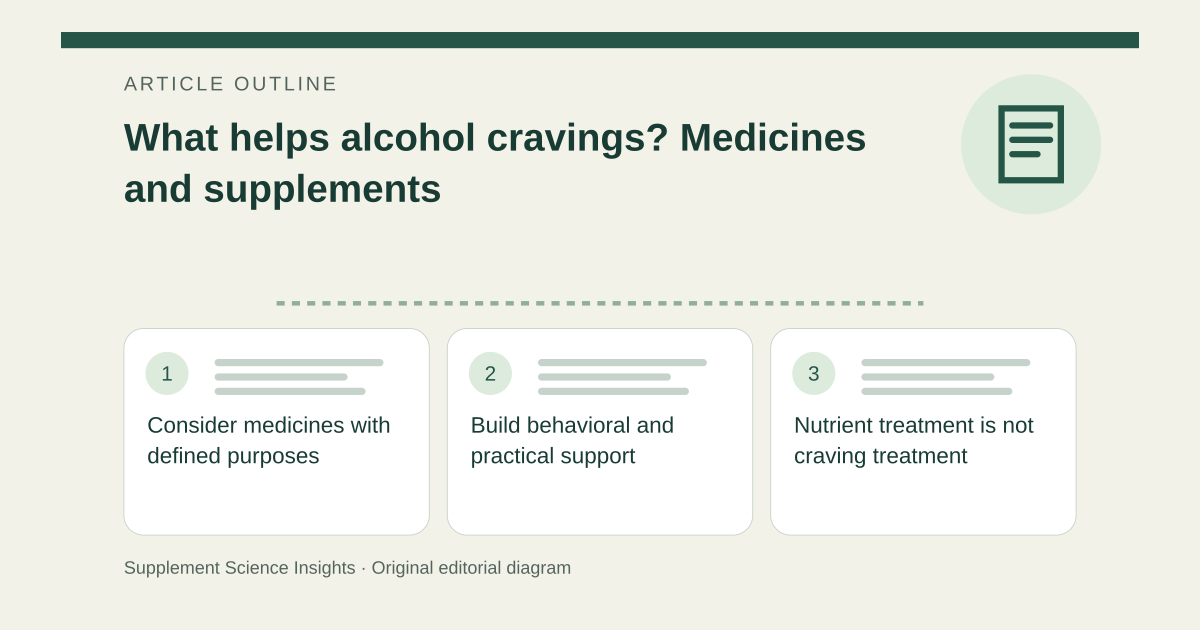
Consider medicines with defined purposes
NIAAA describes naltrexone as reducing the urge to drink, acamprosate as helping maintain abstinence, and disulfiram as discouraging drinking through an unpleasant alcohol reaction. Selection depends on medical history, other medicines and treatment goals. These are prescribed treatments, not interchangeable supplements. [1]
Build behavioral and practical support
Counseling, behavioral treatments and mutual-support groups can help people change drinking patterns and sustain recovery. A clinician can discuss the appropriate level of support and an individualized goal. Medication and behavioral treatment can be used together. [1]
Nutrient treatment is not craving treatment
Thiamine may be needed to prevent or treat deficiency-related neurological harm in specified high-risk situations. Its route and regimen depend on clinical risk. A B-complex, magnesium or detox blend should not be presented as a proven substitute for medication that addresses alcohol-use disorder. [2][3]
Plan withdrawal safely
Imagine shaking, sweating or feeling ill occurs when a drink is delayed. Seek medical support before attempting abrupt withdrawal. Confusion, hallucinations or seizures require emergency care. Buying a supplement to stop cravings does not make those withdrawal risks safe to manage alone. [4]
| Situation | Next consideration |
|---|---|
| Craving reduction | Discuss indicated medicines |
| Maintaining change | Behavioral and peer support |
| Thiamine | Deficiency-risk treatment |
| Withdrawal symptoms | Medical assessment |
Sources for this article
- Treatment for Alcohol Problems: Finding and Getting Help | National Institute on Alcohol Abuse and Alcoholism (NIAAA)
Source consulted: 2026-09-21. This is a reference resource, not a claim that we conducted the studies or tested a product. - Recommendations | Alcohol-use disorders: diagnosis and management of physical complications | Guidance | NICE
Source consulted: 2026-09-21. This is a reference resource, not a claim that we conducted the studies or tested a product. - Dietary Supplements: What You Need to Know - Consumer
Source consulted: 2026-09-21. This is a reference resource, not a claim that we conducted the studies or tested a product. - Alcohol-use disorder - NHS
Source consulted: 2026-09-21. This is a reference resource, not a claim that we conducted the studies or tested a product.