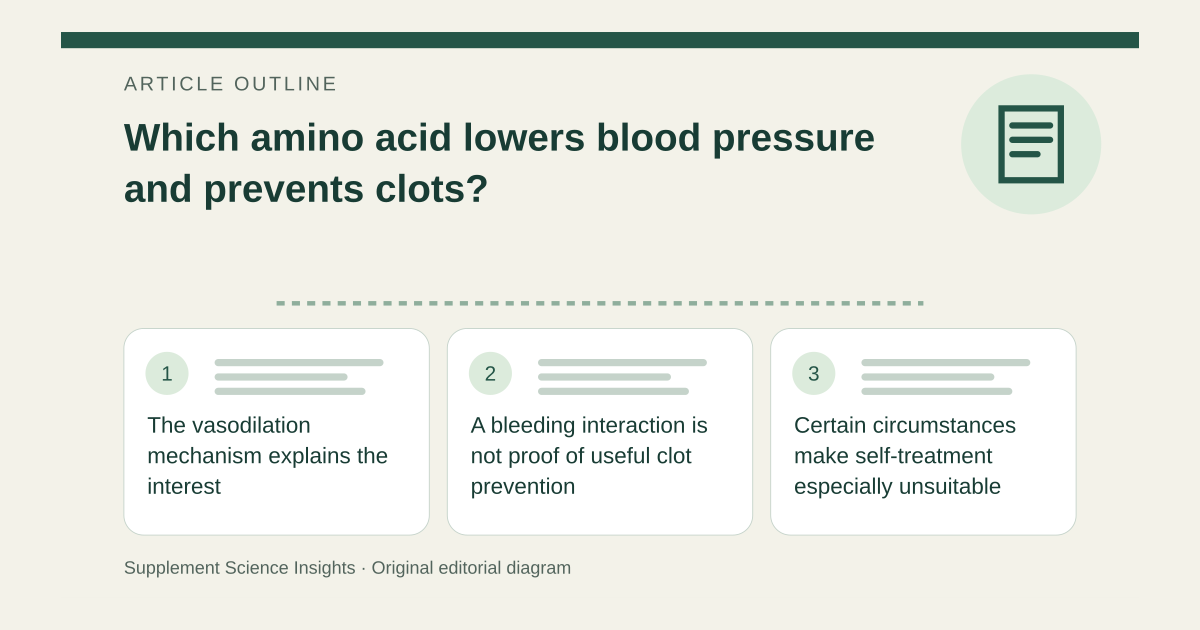
The vasodilation mechanism explains the interest
Arginine is used in producing nitric oxide, which relaxes blood vessels. Mayo describes some blood-pressure-lowering evidence. A biochemical role or average pressure change does not establish the best product or dose for every person. [1]
A bleeding interaction is not proof of useful clot prevention
Mayo warns about possible increased bleeding when arginine is combined with anticoagulants or antiplatelet products. That warning does not mean arginine is a validated substitute for those medicines or can dissolve an existing clot. [1]
Certain circumstances make self-treatment especially unsuitable
Arginine may add to blood-pressure drugs, nitrates or sildenafil and is not recommended after a recent heart attack in the cited guidance. The fact that the body normally uses an amino acid does not guarantee that a concentrated supplement is harmless. [1]
Keep the clinical goal clear
Imagine someone wants one capsule for high pressure and a history of thrombosis. Those problems require an appropriate care plan and medication review. Do not stop either treatment because a supplement advertises nitric oxide or improved circulation. [1][2]
| Situation | Useful interpretation |
|---|---|
| Nitric-oxide role | Mechanism of vasodilation |
| Pressure decreases | Not proof of fewer clots |
| Bleeding interaction | Risk, not treatment efficacy |
| Thrombosis history | Follow specific clinical care |
Sources for this article
- L-arginine - Mayo Clinic
Source consulted: 2026-09-21. This is a reference resource, not a claim that we conducted the studies or tested a product. - Dietary Supplements: What You Need to Know - Consumer
Source consulted: 2026-09-21. This is a reference resource, not a claim that we conducted the studies or tested a product.