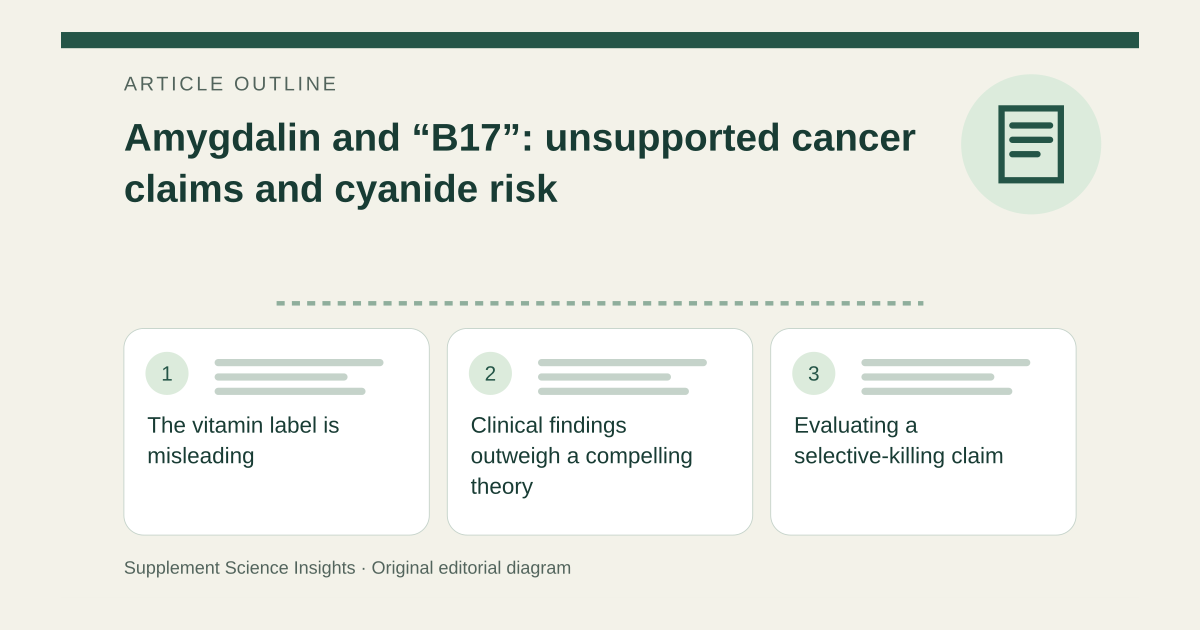
The vitamin label is misleading
MSK describes amygdalin as a plant compound found in sources including apricot kernels. Calling it vitamin B17 does not establish that it is an essential vitamin or that a deficiency causes cancer. Those claims are unsupported. [1]
Clinical findings outweigh a compelling theory
Amygdalin can release cyanide during metabolism. MSK reports that a National Cancer Institute-supported clinical study found no benefit and some participants developed cyanide toxicity. Laboratory anticancer mechanisms do not reverse that clinical finding or demonstrate a safe treatment. [1]
Evaluating a selective-killing claim
Imagine a seller claims a compound harms only abnormal cells. The claim needs evidence in people showing both useful outcomes and acceptable harm to normal tissues. A diagram of a proposed mechanism cannot supply either result. Nor can testimonials identify what would have happened without the product or with appropriate care.
| What a reader sees | What it actually supports |
|---|---|
| “B17” used as a marketing name | Not proof of an essential nutrient |
| Laboratory mechanism | Cannot replace clinical benefit and safety evidence |
Poisoning is not a detox reaction
MSK documents cyanide poisoning following amygdalin or apricot-kernel use, including severe and fatal outcomes. Reported symptoms include vomiting, dizziness, confusion and impaired oxygen delivery. Do not interpret illness after taking such a product as evidence that it is working, and do not use it to replace cancer care. [1]
No purchasing recommendation
This is a safety and evidence page, not a shopping guide. A familiar food source does not establish the safety of a concentrated constituent. The relevant decision is whether credible benefit and acceptable risk have been demonstrated together. The evidence summarized here does not justify selecting a retail product or a self-treatment regimen.
Sources for this article
- Memorial Sloan Kettering Cancer Center — Amygdalin and “B17”
Source consulted: 2026-09-17. This is a reference resource, not a claim that we conducted the studies or tested a product.