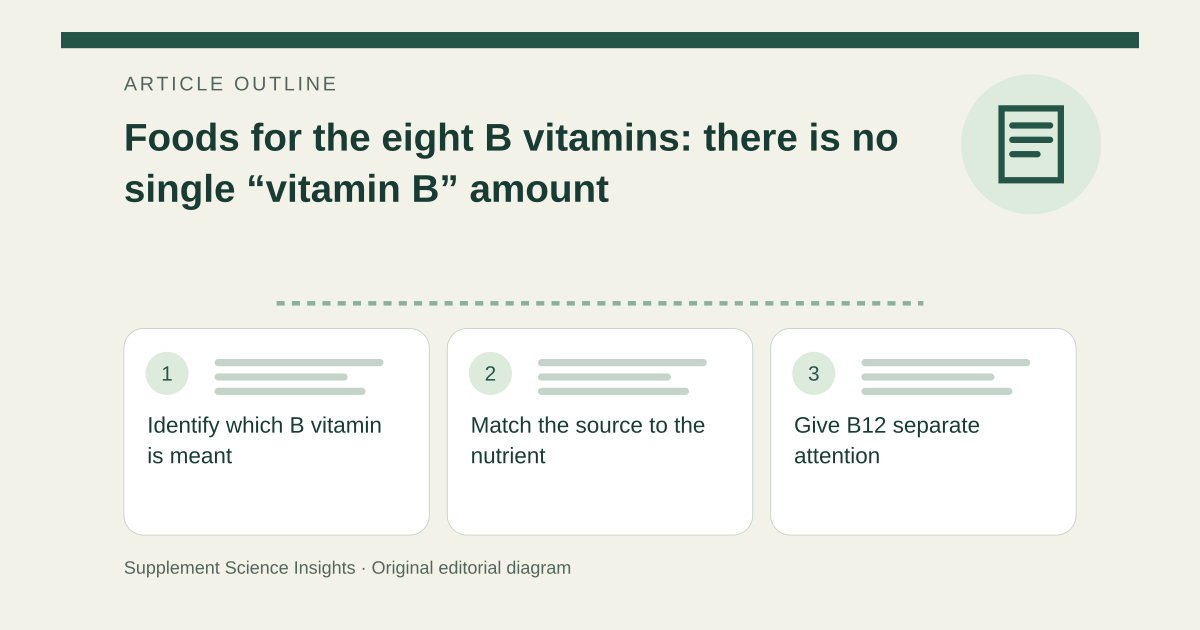
Identify which B vitamin is meant
The B group includes thiamin(B 1), riboflavin(B 2), niacin(B 3), pantothenic acid(B 5), B 6, biotin(B 7), folate(B 9) and B 12. A food can provide several without being the richest source of every one. Do not combine their amounts into one number called total vitamin B: they are distinct nutrients with distinct intake references. [1]
Match the source to the nutrient
Examples include whole or enriched grains and legumes for B 1; milk and eggs for B 2; fish, poultry and enriched grains for B 3; eggs, mushrooms and legumes for B 5; poultry, legumes and bananas for B 6; eggs, nuts and legumes for biotin; and leafy vegetables, beans and fortified cereals for folate. These are examples, not an exhaustive quantitative ranking. Portions and processing matter. [1][2]
Give B12 separate attention
B 12 occurs naturally in animal foods such as fish, meat, eggs and dairy; selected plant foods can be fortified. A plant-based food’s general B-vitamin content does not establish B 12 adequacy. In a hypothetical meal plan, lentils and leafy greens can contribute folate while a specifically B 12-fortified food supplies that separate vitamin. Check the actual fortification and amount. [1]
| Hypothetical food choice | Examples of Bvitamins to assess |
|---|---|
| Enriched grain plus legumes | B 1 and other Bvitamins; use actual portions |
| Milk and eggs | B 2 and other nutrients |
| Lentils and leafy greens | Folate |
| Specifically B 12-fortified food | Check declared B 12 amount |
Sources for this article
- Vitamins: MedlinePlus Medical Encyclopedia
Source consulted: 2026-09-20. This is a reference resource, not a claim that we conducted the studies or tested a product. - Riboflavin - Health Professional Fact Sheet
Source consulted: 2026-09-20. This is a reference resource, not a claim that we conducted the studies or tested a product.