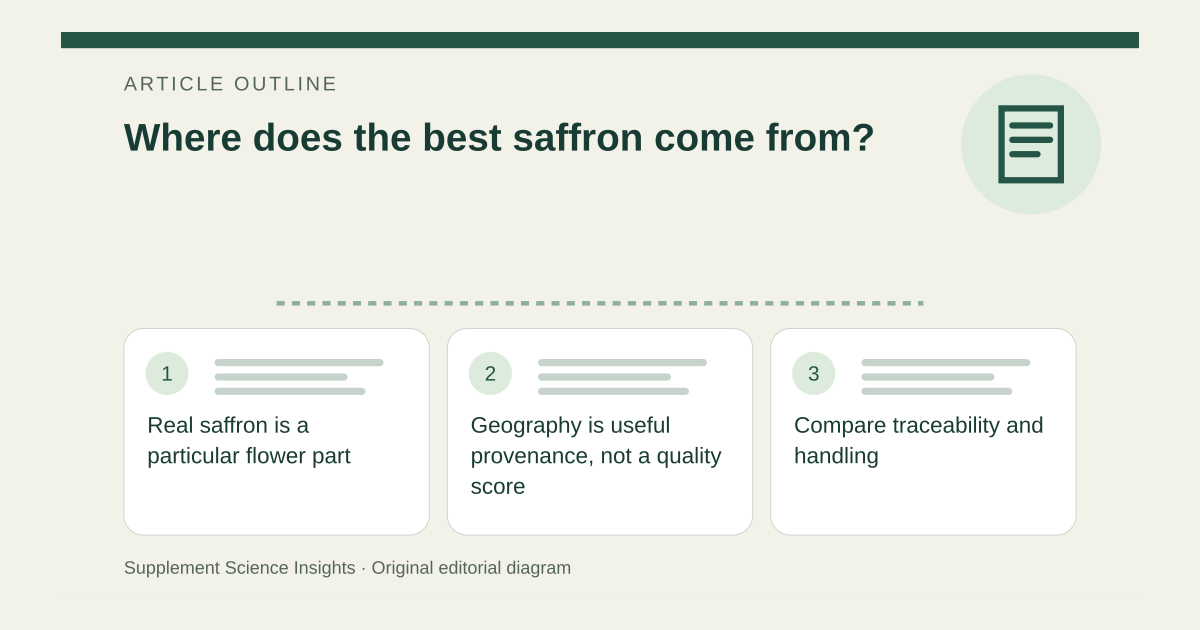
Real saffron is a particular flower part
The spice consists of dried stigmas from Crocus sativus. UVM describes the labor of harvesting the small red stigmas by hand. A red botanical powder or a plant casually called autumn crocus is not automatically saffron. [1][2]
Geography is useful provenance, not a quality score
Cambridge documents saffron’s history across regions and cultivation in places often overlooked in modern marketing. UVM describes cultivation in Vermont. These sources do not support declaring one country’s every harvest superior to all others. [3][1]
Compare traceability and handling
Look for the named species, stated origin, lot information and a supplier able to explain quality checks. Dry, protected storage matters. A high price or vivid color alone cannot certify authenticity, composition or freshness. [1][4]
Choose for the actual use
Imagine two culinary lots from different countries. Compare their traceable identity and condition rather than buying solely on a national superlative. A good spice still does not establish the strength or efficacy of a medicinal extract. [3][4]
| Detail | What it establishes |
|---|---|
| Country | Provenance |
| Species and plant part | Identity |
| Lot and quality information | Traceability |
| Medicinal claim | Needs separate evidence |
Sources for this article
- Saffron: World's Most Expensive Spice | University of…
Source consulted: 2026-09-21. This is a reference resource, not a claim that we conducted the studies or tested a product. - Saffron
Source consulted: 2026-09-21. This is a reference resource, not a claim that we conducted the studies or tested a product. - Saffron: a Cambridge spice | University of Cambridge
Source consulted: 2026-09-21. This is a reference resource, not a claim that we conducted the studies or tested a product. - Dietary Supplements: What You Need to Know
Source consulted: 2026-09-21. This is a reference resource, not a claim that we conducted the studies or tested a product.