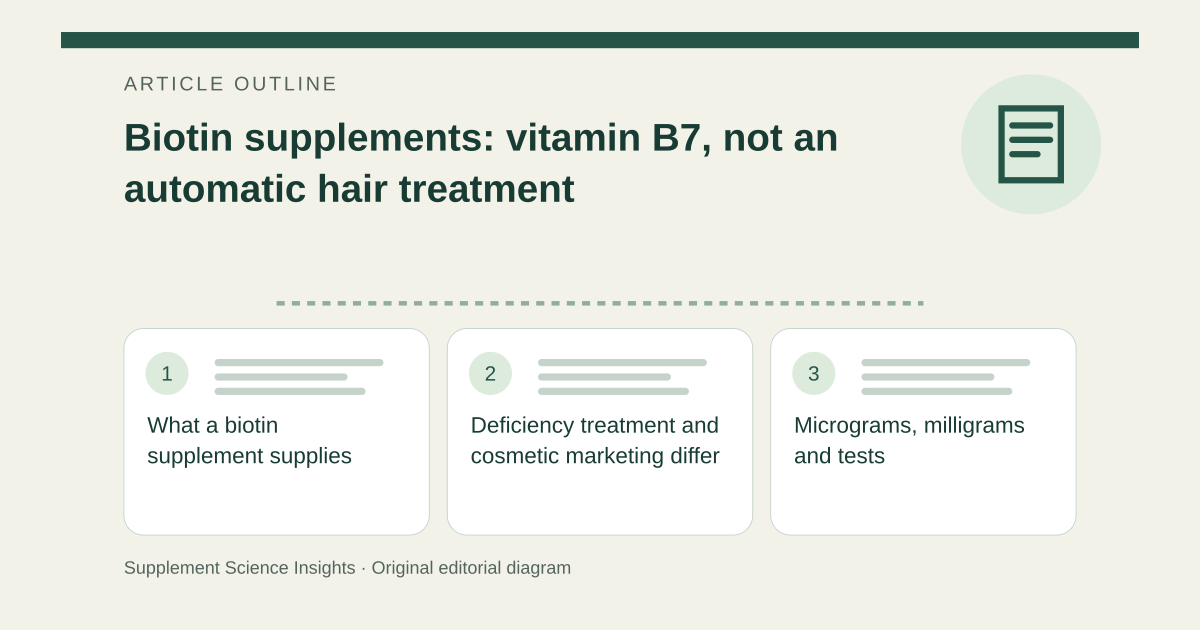
What a biotin supplement supplies
Biotin, also called vitamin B 7, is a cofactor for enzymes involved in metabolizing fats, carbohydrates and amino acids. The adult adequate intake is 30 mcg daily. This is an intake reference, not proof that every adult needs a separate supplement. Food contributes biotin, and NIH ODS describes deficiency as rare. [1]
Deficiency treatment and cosmetic marketing differ
Biotin deficiency can affect hair and skin, but a symptom associated with deficiency does not mean most people with that symptom are deficient. ODS reports limited evidence supporting biotin supplements for hair, skin and nails in people without deficiency. Persistent changes deserve assessment rather than automatically escalating a supplement dose. [1]
Micrograms, milligrams and tests
A hypothetical 5 mg tablet contains 5,000 mcg—far more than the 30 mcg adult adequate intake. This comparison does not establish benefit or a toxicity threshold. Biotin can interfere with certain laboratory assays, producing misleading results. Tell the clinician and laboratory about biotin use; any instructions about stopping it depend on the test and regimen, not a universal wait time. [1]
| Hypothetical quantity | Conversion or interpretation |
|---|---|
| 5 mg supplement | 5,000 mcg |
| 30 mcg adult adequate intake | Nutritional reference, not a treatment dose |
| Upcoming laboratory testing | Disclose the supplement and follow test-specific instructions |
Sources for this article
- Biotin - Health Professional Fact Sheet
Source consulted: 2026-09-20. This is a reference resource, not a claim that we conducted the studies or tested a product.