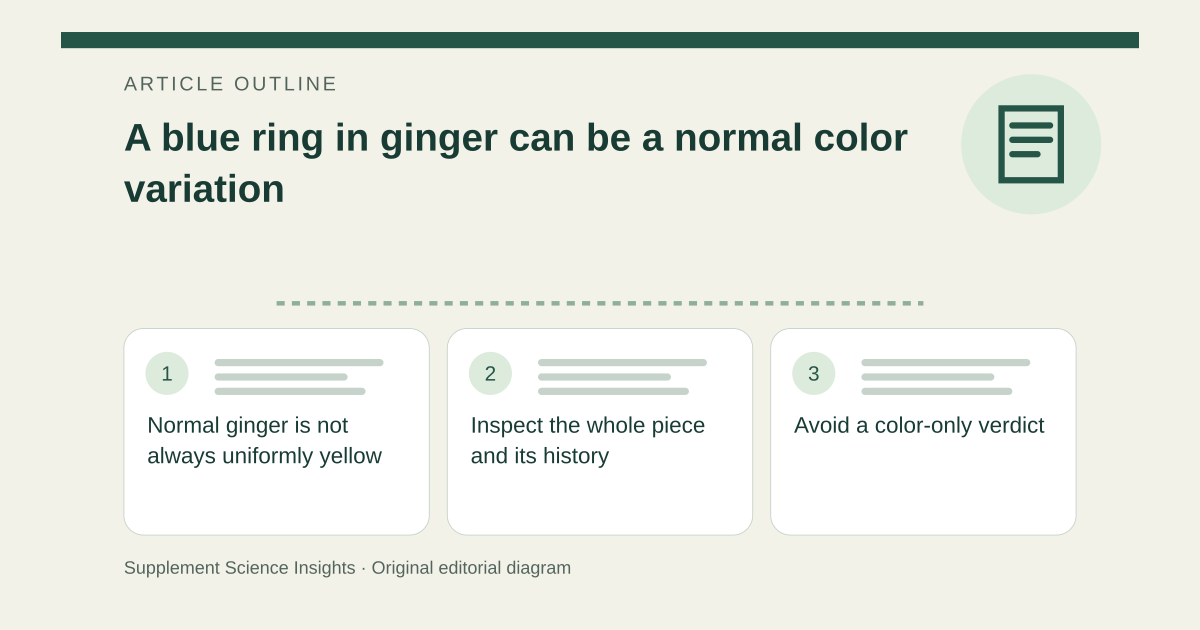
Normal ginger is not always uniformly yellow
Virginia Cooperative Extension describes white, yellow and blue flesh, including ginger with a ring of blue. This observation concerns culinary Zingiber officinale. It should not be used to identify an unknown ornamental plant that happens to have blue ginger in its common name. [1]
Inspect the whole piece and its history
Color inside a sound rhizome is different from visible surface mold, decay or damage. FDA advises selecting sound produce, removing damaged areas appropriately and handling it cleanly. If the condition is uncertain, a blue-ring explanation should not be used to dismiss separate signs that the food has deteriorated. [2][3]
Avoid a color-only verdict
Imagine a newly cut, firm piece has a clean blue ring without other deterioration: that matches a documented natural variation. A soft, decaying piece with unusual surface growth is a different situation. Neither a photograph nor the ring by itself establishes the safety of the entire food. [1][2]
| Situation | Practical interpretation |
|---|---|
| Firm culinary ginger with blue ring | Can be natural variation |
| Decay or surface growth | A separate concern |
| Unknown plant called blue ginger | Identity still needs verification |
Sources for this article
- Growing Ginger at Home | Virginia Cooperative Extension | Virginia Tech
Source consulted: 2026-09-20. This is a reference resource, not a claim that we conducted the studies or tested a product. - Selecting and Serving Produce Safely | FDA
Source consulted: 2026-09-20. This is a reference resource, not a claim that we conducted the studies or tested a product. - Storing Fresh Ginger • AnswerLine • Iowa State University Extension and Outreach
Source consulted: 2026-09-20. This is a reference resource, not a claim that we conducted the studies or tested a product.