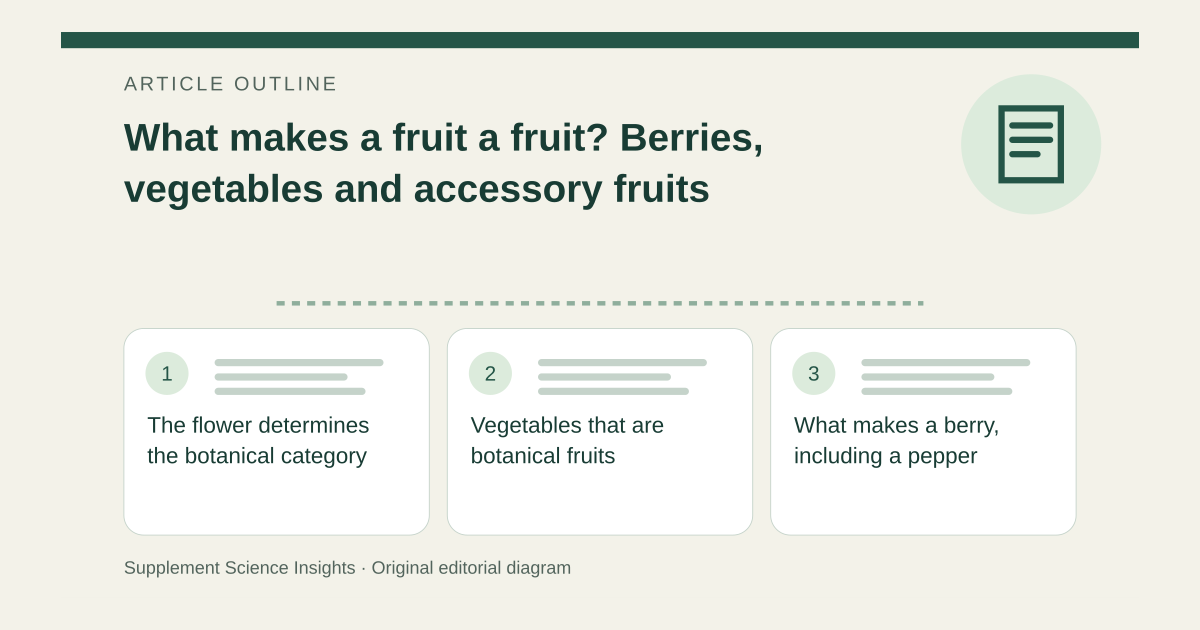
The flower determines the botanical category
A botanical fruit develops from a flower’s ovary; its wall surrounds the developing seeds. It need not be sweet or served as dessert. Dry seed-bearing structures can also be fruits. In contrast, vegetable is a culinary grouping that can include different plant organs rather than one reproductive structure. [1][2]
Vegetables that are botanical fruits
Tomatoes, cucumbers, squash and eggplants are familiar kitchen vegetables that develop as botanical fruits. Bell peppers belong on that list too. Calling a tomato a vegetable in a recipe does not reverse its development from a flower. The two labels answer different questions: which organ formed, and how people use it. [1][3]
What makes a berry, including a pepper
A botanical berry is a simple fleshy fruit formed from one ovary, which can contain several fused carpels. Grapes and tomatoes are examples. The word does not require a small, sweet food or a name ending in berry. NParks specifically classifies bell pepper fruits as berries: their crisp walls and hollow, seed-containing interior do not exclude them. This concerns Capsicum peppers, not every plant bearing the common name pepper. [2][3]
Accessory describes the tissue, not a lesser fruit
An accessory fruit includes substantial tissue from outside the ovary. Apple flesh includes hypanthium tissue; the strawberry’s red flesh is mainly enlarged receptacle. A strawberry is also aggregate because multiple ovaries from one flower contribute its small surface fruits. Thus accessory and aggregate describe different features and can both apply. [2]
Using a hypothetical classroom chart
Give a classroom chart separate columns for botanical structure and kitchen use. A bell pepper can receive both berry and vegetable labels without contradiction. Avoid assigning one exclusive bucket to words that describe different properties. The chart explains anatomy, not whether two foods have equivalent nutrients. [3]
| Food | Botanical category | Common kitchen grouping |
|---|---|---|
| Tomato | Fruit; berry | Vegetable |
| Bell pepper | Fruit; berry | Vegetable |
| Cucumber | Fruit | Vegetable |
| Apple | Accessory fruit | Fruit |
Sources for this article
- Oregon State University Extension — Reproductive plant parts
Source consulted: 2026-09-20. This is a reference resource, not a claim that we conducted the studies or tested a product. - University of Minnesota — Fruit Morphology
Source consulted: 2026-09-20. This is a reference resource, not a claim that we conducted the studies or tested a product. - Singapore NParks — Capsicum annuum (red bell pepper)
Source consulted: 2026-09-20. This is a reference resource, not a claim that we conducted the studies or tested a product.