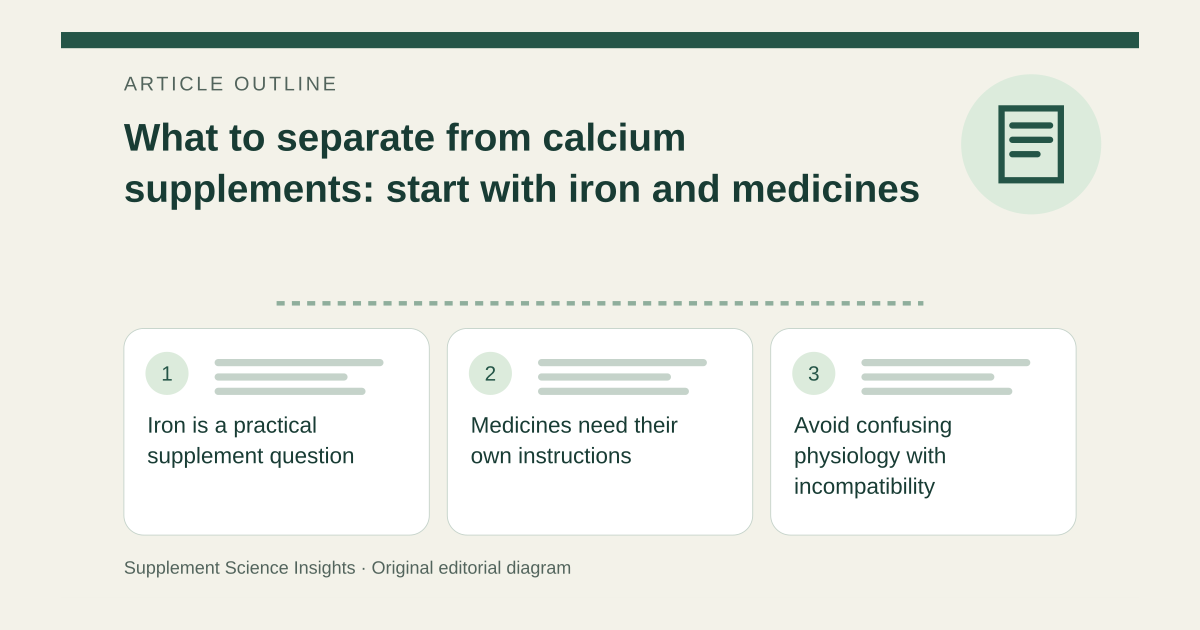
Iron is a practical supplement question
ODS notes that calcium may reduce iron absorption, while the size and long-term importance of the effect are not fully settled. When treating iron deficiency, follow the prescribed plan and ask whether calcium and iron should be taken at different times. Do not stop prescribed iron simply because a meal contains calcium. [1]
Medicines need their own instructions
Calcium can interact with medicines such as levothyroxine and some antibiotics. Their instructions may require a particular separation interval or meal context. A list of supplements alone misses these more consequential scheduling issues. A pharmacist can review the full list without applying one interval to every drug. [2]
Avoid confusing physiology with incompatibility
Vitamin D supports calcium absorption; its presence is not a reason to avoid the combination. However, total amounts still matter. Imagine a calcium product contains D and the user already takes D separately: the question is cumulative intake and need, not automatic incompatibility. Keep the distinction between spacing and excessive dose clear. [2][3]
| Illustrative situation | Relevant distinction |
|---|---|
| Iron treatment | Review timing with the treatment plan |
| Levothyroxine | Follow drug-specific spacing |
| Added vitamin D | Review total intake, not blanket avoidance |
Sources for this article
- Iron - Health Professional Fact Sheet
Source consulted: 2026-09-20. This is a reference resource, not a claim that we conducted the studies or tested a product. - Calcium - Health Professional Fact Sheet
Source consulted: 2026-09-20. This is a reference resource, not a claim that we conducted the studies or tested a product. - Vitamin D - Health Professional Fact Sheet
Source consulted: 2026-09-20. This is a reference resource, not a claim that we conducted the studies or tested a product.