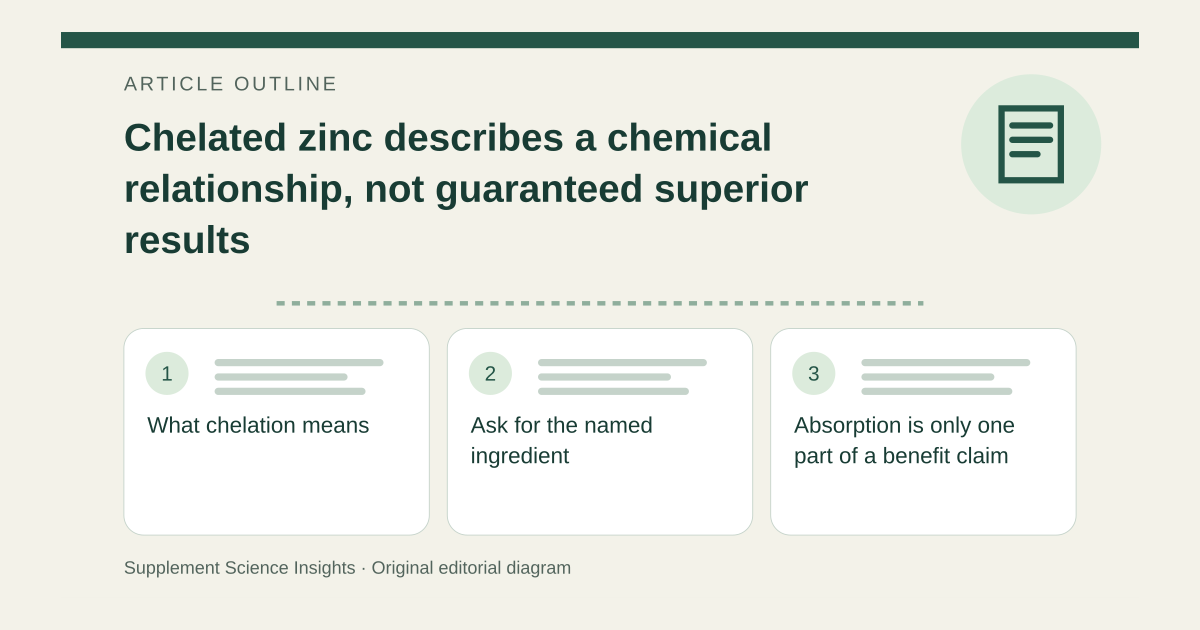
What chelation means
IUPAC defines chelation in terms of multiple binding sites on one ligand interacting with a central atom. With zinc supplements, chelated describes a form of metal binding. The word alone does not identify the exact ligand, specify the elemental amount or certify the purity of a retail product. [1]
Ask for the named ingredient
The zinc compound and nutrient quantity belong in a useful comparison. Terms such as amino-acid chelate are more informative when the actual ligand and specification are supplied. Different zinc salts and complexes should not be assumed to have identical absorption, but a generic chelated label is not a universal clinical ranking. [1][2]
Absorption is only one part of a benefit claim
NIH ODS summarizes differences in measured absorption among some zinc forms. A chemical definition does not show that a particular product prevents illness, treats deficiency better or is needed when intake is adequate. Imagine two products each provide 10 mg elemental zinc: deciding between them requires more than selecting the one with a stronger-sounding chelation claim. [2]
| Hypothetical label detail | Question answered |
|---|---|
| Named zinc complex | Ingredient identity |
| Zinc 10 mg per serving | Nutrient contribution |
| Chelated only | Exact ligand and clinical benefit remain unresolved |
Sources for this article
- IUPAC - chelation (C01012)
Source consulted: 2026-09-20. This is a reference resource, not a claim that we conducted the studies or tested a product. - Zinc - Health Professional Fact Sheet
Source consulted: 2026-09-20. This is a reference resource, not a claim that we conducted the studies or tested a product.