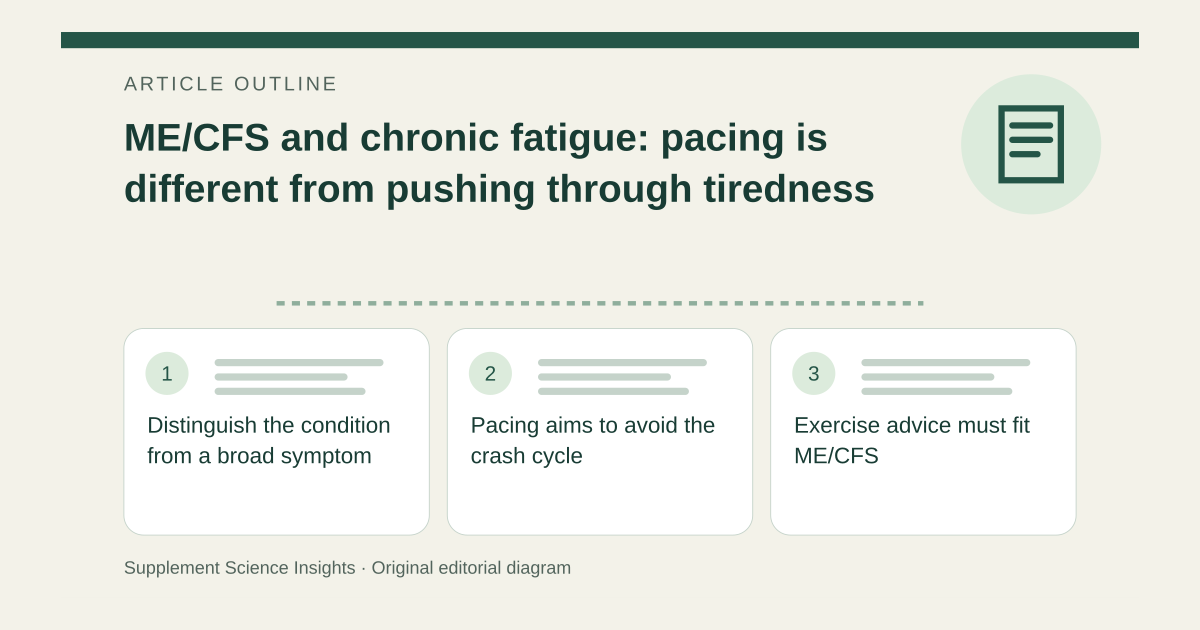
Distinguish the condition from a broad symptom
Long-lasting fatigue has several possible explanations. In ME/CFS, post-exertional malaise can cause symptoms to worsen after physical or mental effort, sometimes with a delay. CDC guidance emphasizes individualized management because the condition and tolerances vary. [1]
Pacing aims to avoid the crash cycle
Activity management means balancing effort and rest within individual limits. An activity and symptom diary can help identify delayed worsening. It is not a fixed rule to increase activity every week regardless of symptoms. [1]
Exercise advice must fit ME/CFS
CDC states that exercise is not a cure and that vigorous programs tolerated in other illnesses may not be tolerated in ME/CFS. Work with professionals who understand the condition rather than following generic advice to push through fatigue. [1]
Supplements need a specific reason
A product labeled mitochondrial or energy support does not establish a cure. Treating an identified deficiency is a separate question from treating ME/CFS. Review ingredients and possible effects on sleep or other symptoms before adding a stack. [2]
Prioritize the most disruptive symptom
Imagine a person repeatedly crashes after trying to catch up on better days. Review pacing and the delayed pattern with the care team. CDC also describes addressing sleep, pain and other major symptoms in a plan shaped with the patient; no single approach works for everyone. [1]
| Goal or finding | Meaning |
|---|---|
| Delayed worsening after effort | Consider post-exertional malaise |
| Pacing | Balance activity and rest within limits |
| Energy supplement claim | Not an established cure |
Sources for this article
- Manage ME/CFS | ME/CFS | CDC
Source consulted: 2026-09-20. This is a reference resource, not a claim that we conducted the studies or tested a product. - Dietary Supplements: What You Need to Know
Source consulted: 2026-09-20. This is a reference resource, not a claim that we conducted the studies or tested a product.