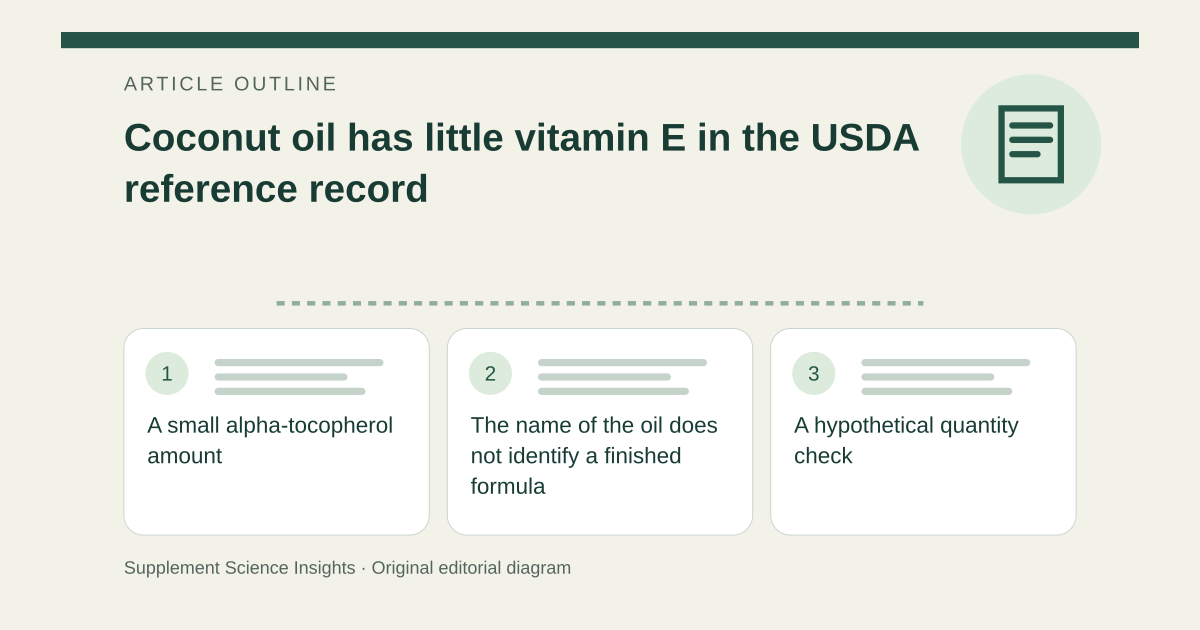
A small alpha-tocopherol amount
USDA SR Legacy lists coconut oil at 0.11 mg vitamin E as alpha-tocopherol per 100 g. A hypothetical 14 g serving gives about 0.02 mg. For perspective, the raw-almond record contains 25.63 mg per 100 g. These numbers describe the specified foods, not an added-vitamin-E cosmetic mixture. [1]
The name of the oil does not identify a finished formula
A product can contain coconut oil plus added tocopherol or other ingredients. Such a mixture needs its own label; it cannot be assigned the nutrient content of plain coconut oil. Conversely, the fact that coconut oil contains a trace of vitamin E does not make it a concentrated vitamin E preparation. This composition comparison does not evaluate topical absorption, eczema treatment or hair growth. [1]
A hypothetical quantity check
If 14 g coconut oil contains about 0.02 mg alpha-tocopherol using this record, doubling the oil to 28 g gives about 0.03 mg. That remains a small measured nutrient contribution. A bottle’s marketing language cannot replace a declaration of any added vitamin E, and these calculations are not advice to increase oil intake. [1]
| Hypothetical amount | Alpha-tocopherol estimate |
|---|---|
| Coconut oil 14 g | 0.02 mg |
| Coconut oil 28 g | 0.03 mg |
| Raw almonds 28 g | 7.18 mg |
Sources for this article
- USDA FoodData Central — SR Legacy April 2018 composition and portion tables
Source consulted: 2026-09-20. This is a reference resource, not a claim that we conducted the studies or tested a product.