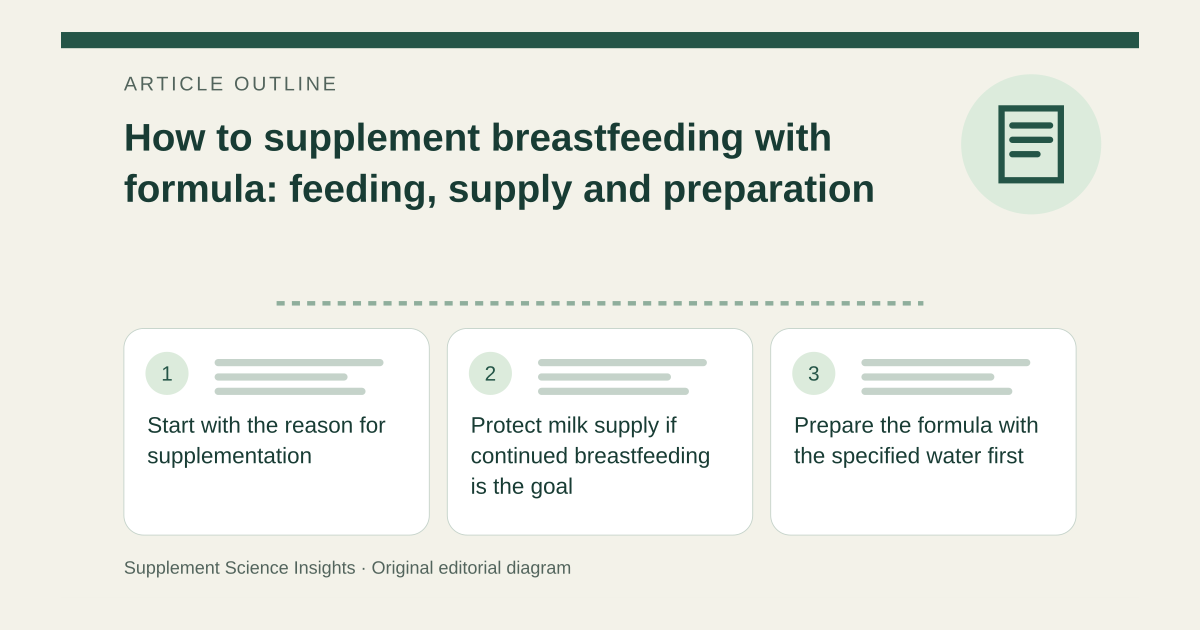
Start with the reason for supplementation
Mixed feeding can support family preferences, time apart or a clinical feeding need. If supplementation has been recommended for the baby’s intake or growth, follow that plan promptly; do not postpone needed feeds to establish exclusive breastfeeding. A midwife, pediatric clinician or feeding specialist can help tailor the schedule. [1]
Protect milk supply if continued breastfeeding is the goal
The NHS advises expressing regularly between bottle feeds to help maintain supply. If reducing breastfeeding, making changes gradually can reduce breast discomfort and mastitis risk. The plan should be practical for the parent while ensuring the baby receives enough milk. [1]
Prepare the formula with the specified water first
CDC instructs using the exact water and powder amounts on the container, measuring water before adding powder. Do not concentrate the feed or replace the required water with breast milk unless the baby’s clinician has prescribed specific fortification instructions. Follow additional precautions for premature, immunocompromised or very young infants. [2]
Feed responsively and handle leftovers safely
Hold the baby supported and fairly upright, keep the bottle nearly horizontal, allow breaks and do not force the baby to finish. Never prop a bottle or leave a baby feeding unattended. CDC advises using prepared formula within two hours of preparation and one hour after feeding starts; discard the bottle’s leftovers after feeding. [3][2]
Make the schedule individual rather than copying a fixed top-up
Imagine a parent wants one formula feed while away from home. The plan includes an appropriate amount for that baby, safe preparation and whether to express during the separation. A baby with poor intake or growth needs a clinician-led feeding plan rather than an online standard top-up volume. [1][3]
| Need | Practical step |
|---|---|
| Maintain milk supply | Regular feeding or expressing |
| Prepare powder | Exact water first, then measured powder |
| Baby finishes early | Do not force the remaining milk |
Sources for this article
- Introduction to mixed feeding - Best Start in Life - NHS
Source consulted: 2026-09-20. This is a reference resource, not a claim that we conducted the studies or tested a product. - Infant Formula Preparation and Storage | Infant and Toddler Nutrition | CDC
Source consulted: 2026-09-20. This is a reference resource, not a claim that we conducted the studies or tested a product. - Bottle feeding advice - NHS
Source consulted: 2026-09-20. This is a reference resource, not a claim that we conducted the studies or tested a product.