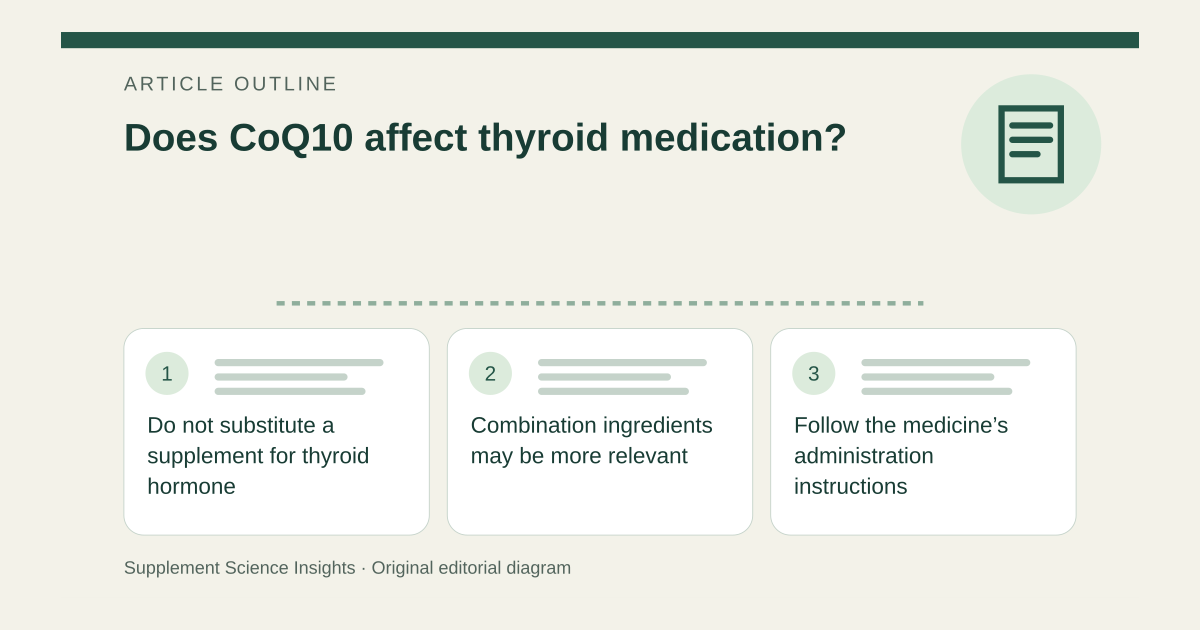
Do not substitute a supplement for thyroid hormone
Levothyroxine replaces thyroid hormone in hypothyroidism. CoQ10 has a different biological role and is not a replacement. Persistent tiredness should prompt review of the underlying condition and treatment rather than assuming an energy supplement can correct an inadequate thyroid dose. [1][2]
Combination ingredients may be more relevant
NHS lists calcium and iron among supplements that can interfere with levothyroxine treatment. Biotin can affect thyroid test results. A product marketed around CoQ10 may contain other nutrients, so checking only the headline ingredient can miss an important issue. [1][3]
Follow the medicine’s administration instructions
Current NHS guidance advises levothyroxine on an empty stomach, 30–60 minutes before the first meal, caffeine or other medicines. Ask the pharmacist how to fit the exact supplement into the regimen; this is not evidence for a special CoQ10-specific separation rule. [1]
Report changes before adjusting the prescription
Imagine thyroid results change after adding a multinutrient CoQ10 product. Bring the label and explain timing and any biotin use to the clinician. Do not change levothyroxine yourself based on a presumed interaction. [1]
| Item | Reason |
|---|---|
| Levothyroxine schedule | Absorption consistency |
| Calcium or iron | Known interaction concern |
| Biotin | Possible test interference |
| CoQ10 alone | Specific interaction not established here |
Sources for this article
- Levothyroxine: a medicine for an underactive thyroid (hypothyroidism) - NHS
Source consulted: 2026-09-21. This is a reference resource, not a claim that we conducted the studies or tested a product. - Coenzyme Q10 | NCCIH
Source consulted: 2026-09-21. This is a reference resource, not a claim that we conducted the studies or tested a product. - Dietary Supplements: What You Need to Know
Source consulted: 2026-09-21. This is a reference resource, not a claim that we conducted the studies or tested a product.