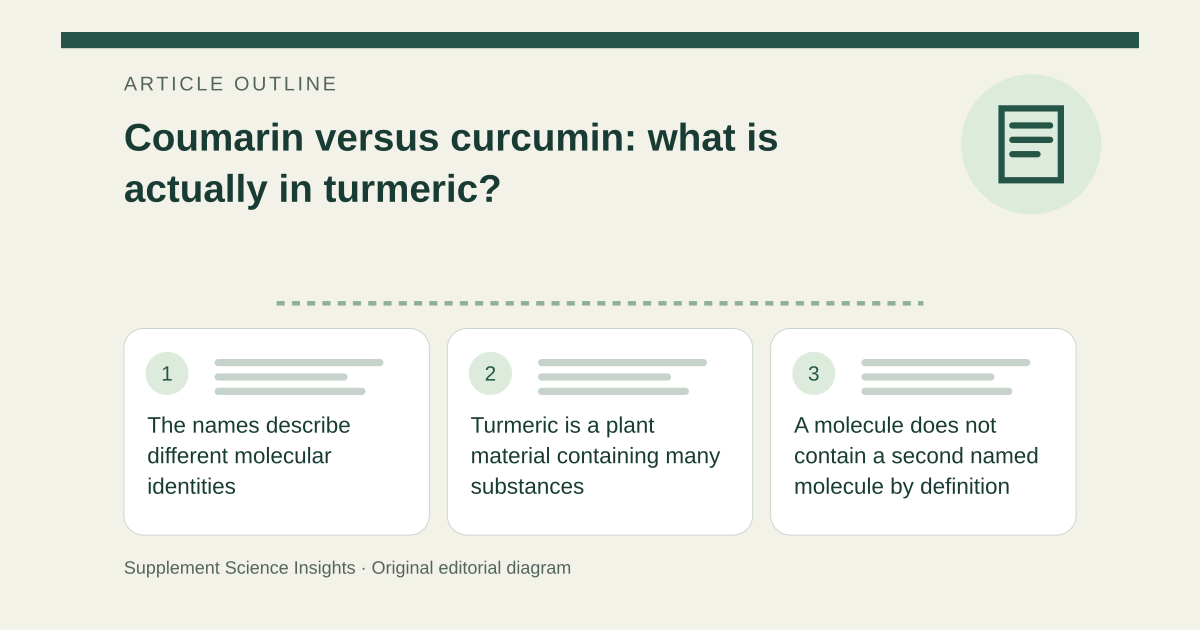
The names describe different molecular identities
PubChem lists curcumin as CID 969516 with formula C21H20O6, and coumarin as CID 323 with formula C9H6O2. These formulas and identities differ. A product described as curcumin should not be interpreted as containing coumarin merely because the names sound similar. [1][2]
Turmeric is a plant material containing many substances
NCCIH identifies curcumin as a major turmeric component within the curcuminoid group. Whole turmeric, an extract and a purified chemical are not interchangeable descriptions. A plant product may also be blended with other ingredients, so the full label matters. [3]
A molecule does not contain a second named molecule by definition
Pure curcumin is not a package holding coumarin. A mixture could contain multiple compounds, but demonstrating that requires an ingredient declaration or chemical analysis. The chemical identity alone cannot determine contamination, adulteration or trace composition of a purchased powder. [1][2]
Do not infer safety from the naming correction
Establishing that curcumin is not coumarin does not establish that a turmeric supplement is harmless. NCCIH describes gastrointestinal adverse effects and liver injury with some enhanced formulations. Judge those concerns from the product and evidence, not from substituting one chemical name for another. [3]
Resolve a confusing label directly
Imagine a blend lists turmeric extract and a separate botanical ingredient, while an advertisement mentions coumarin. Ask which ingredient supplies the claimed compound and whether the manufacturer has relevant analytical data. The word curcumin alone cannot answer that composition question. [3][1][2]
| Term | Meaning |
|---|---|
| Turmeric | Plant-derived material or preparation |
| Curcumin | A particular curcuminoid compound |
| Coumarin | A different chemical identity |
| Finished blend | Composition depends on all ingredients and testing |
Sources for this article
- PubChem Curcumin CID 969516
Source consulted: 2026-09-21. This is a reference resource, not a claim that we conducted the studies or tested a product. - PubChem Coumarin CID 323
Source consulted: 2026-09-21. This is a reference resource, not a claim that we conducted the studies or tested a product. - Turmeric: Usefulness and Safety | NCCIH
Source consulted: 2026-09-21. This is a reference resource, not a claim that we conducted the studies or tested a product.