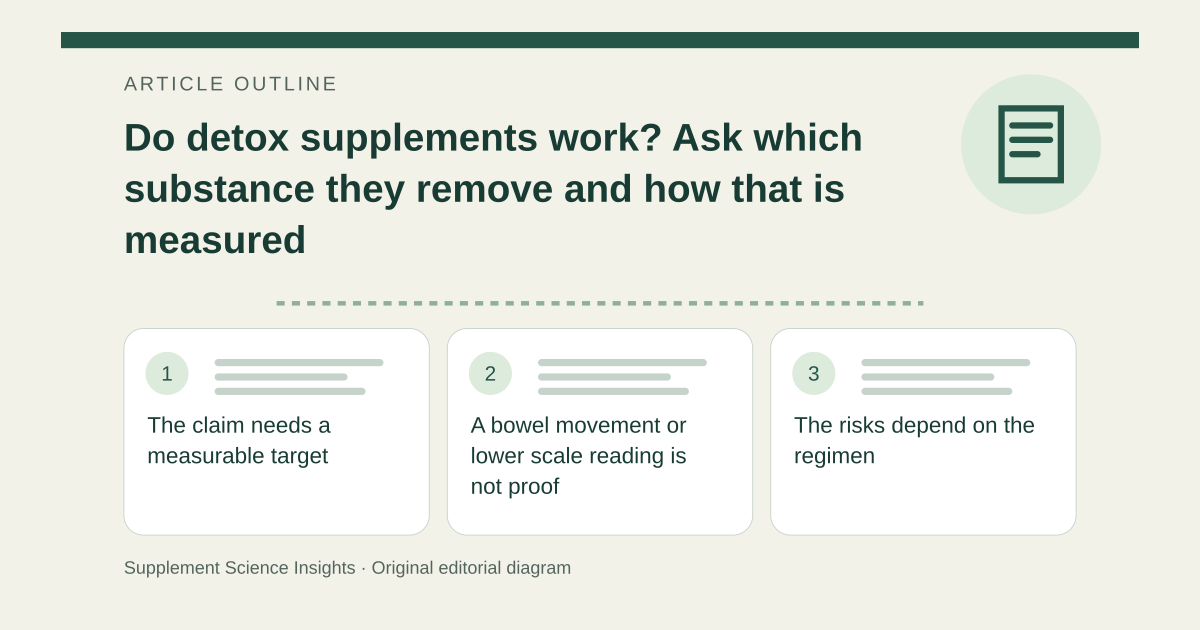
The claim needs a measurable target
NCCIH describes limited, generally low-quality research on commercial detox programs. Its review does not establish broad toxin-removal or durable weight-management benefits. A meaningful claim would name the substance, demonstrate a relevant change and show a health benefit rather than merely use the word cleanse. [1]
A bowel movement or lower scale reading is not proof
Laxatives can produce diarrhea and fluid loss. Restrictive regimens may lower weight initially through reduced intake, while results can reverse when ordinary eating resumes. Neither observation by itself demonstrates removal of a harmful stored substance. [1]
The risks depend on the regimen
NCCIH warns about dehydration, nutrient restriction and electrolyte imbalance with some approaches. The commercial label does not make a multi-herb laxative, prolonged fast or colon-cleansing procedure harmless. Review the ingredients and relevant medical conditions before using a product. [1][2]
Separate marketing from medical treatment
Imagine an advertisement calls frequent stools evidence that toxins are leaving. Ask what toxin was measured and whether the change is more than a laxative effect. Medically supervised treatment for a specific poisoning is a different issue from buying a general wellness cleanse. [1]
| Claim or situation | Useful next question |
|---|---|
| Undefined toxins | No clear outcome to verify |
| Diarrhea after a cleanse | May indicate laxative effects and fluid loss |
| Specific suspected exposure | Seek appropriate medical evaluation |
Sources for this article
- “Detoxes” and “Cleanses”: What You Need To Know | NCCIH
Source consulted: 2026-09-20. This is a reference resource, not a claim that we conducted the studies or tested a product. - Dietary Supplements: What You Need to Know
Source consulted: 2026-09-20. This is a reference resource, not a claim that we conducted the studies or tested a product.