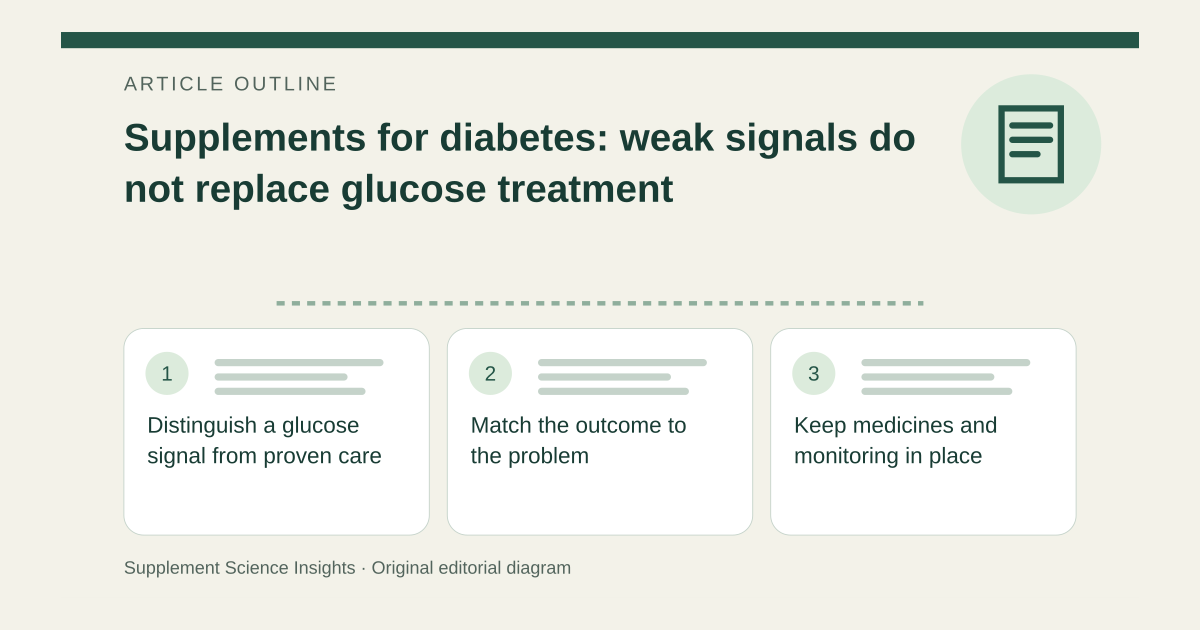
Distinguish a glucose signal from proven care
NCCIH notes possible signals for chromium, cinnamon and berberine, but studies differ in formulation, population, duration and results. These limits prevent a clear universal recommendation. A claim about one tested preparation does not validate every blend with the same ingredient name. [1]
Match the outcome to the problem
A possible effect on neuropathic pain is not the same as improved glucose control or protection from kidney disease. For example, alpha-lipoic acid is discussed for nerve-pain research; that does not establish it as a substitute for glucose-lowering treatment. [1]
Keep medicines and monitoring in place
NCCIH warns against products claiming to cure diabetes naturally or replace medicines. Discuss any add-on with the diabetes team, particularly when kidney disease is present. Treatment should reflect the type of diabetes and the person’s clinical situation, not an online ranking. [1]
Nutritional replacement has a different purpose
Metformin-related B12 concerns or another confirmed deficiency can justify targeted testing and replacement. That is separate from buying a general blood-sugar blend. Include every supplement in medication review so dose overlap and interactions can be assessed. [2][3]
Ask for an outcome and a review date
Imagine a person already taking diabetes medicines wants a berberine product. Bring the exact formulation, ask about interactions and agree how glucose and side effects will be followed. Do not reduce prescribed treatment on the basis of the supplement’s label. [1][3]
| Option or finding | Practical implication |
|---|---|
| Blood-sugar blend | Evidence may not match the formulation |
| Kidney disease | Professional safety review is important |
| Confirmed nutrient deficiency | Targeted replacement is a separate decision |
Sources for this article
- Diabetes and Dietary Supplements: What You Need To Know | NCCIH
Source consulted: 2026-09-20. This is a reference resource, not a claim that we conducted the studies or tested a product. - Vitamin B12 - Health Professional Fact Sheet
Source consulted: 2026-09-20. This is a reference resource, not a claim that we conducted the studies or tested a product. - Dietary Supplements: What You Need to Know
Source consulted: 2026-09-20. This is a reference resource, not a claim that we conducted the studies or tested a product.