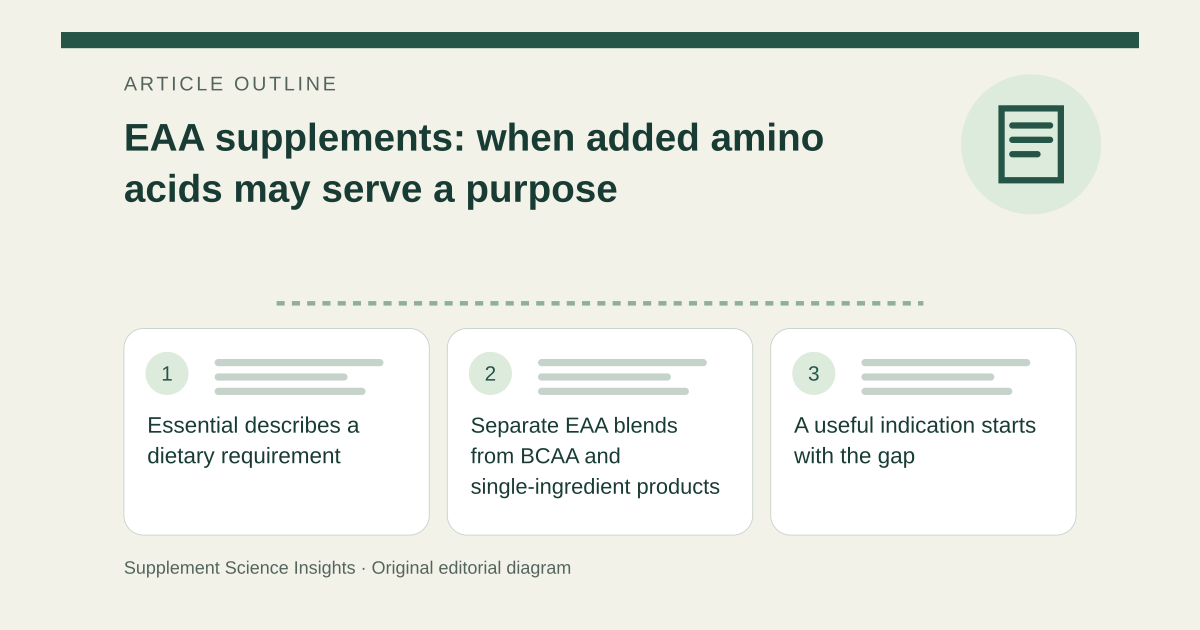
Essential describes a dietary requirement
The nine EAAs must come from food because the body cannot make enough through its own synthesis. Protein-containing foods supply amino acids, and a varied diet can meet these needs. An EAA blend is one way to deliver selected amino acids, not a compulsory addition to complete dietary protein. [1][2]
Separate EAA blends from BCAA and single-ingredient products
BCAAs are only a subset of the essential group. A single amino acid may be studied for a different clinical or performance purpose. Evidence for one ingredient or formulation cannot establish the effect of every product labeled amino support. [3][1]
A useful indication starts with the gap
If food intake is limited, a dietitian can assess protein, energy and the overall nutritional pattern. For exercise, NIH ODS places supplements alongside adequate food and training. Adding an EAA drink when the diet already supplies sufficient protein does not automatically produce more muscle or better recovery. [3][2]
There is no universal EAA scoop dose
Blends differ in total amount, proportions, serving count and co-ingredients. A study’s amount belongs to its formulation and population; it cannot be inferred from the word essential. Follow the actual product and clinical plan rather than combining several powders to reach an invented all-purpose target. [3][4]
Safety requires the whole formula
Some performance mixtures contain stimulants or additional active ingredients. Count all overlapping sources and review health conditions and medicines. A food-derived name does not certify unlimited supplemental intake, and more ingredients can make a reaction harder to identify. [3][4]
Compare the addition with what is already supplied
Imagine someone uses a complete protein shake, an EAA drink and a BCAA product. List the protein and amino acids already provided and explain the intended purpose of each. The number of products is not a measure of nutritional completeness or training quality. [3][2]
| Question | Needed detail |
|---|---|
| Why add it? | Dietary gap or specific evidence-based purpose |
| What is the dose? | Exact ingredient amounts, not scoop name |
| What is already used? | Protein and overlapping supplements |
Sources for this article
- Amino acids: MedlinePlus Medical Encyclopedia
Source consulted: 2026-09-21. This is a reference resource, not a claim that we conducted the studies or tested a product. - Protein in diet: MedlinePlus Medical Encyclopedia
Source consulted: 2026-09-21. This is a reference resource, not a claim that we conducted the studies or tested a product. - Dietary Supplements for Exercise and Athletic Performance - Health Professional Fact Sheet
Source consulted: 2026-09-21. This is a reference resource, not a claim that we conducted the studies or tested a product. - Dietary Supplements: What You Need to Know
Source consulted: 2026-09-21. This is a reference resource, not a claim that we conducted the studies or tested a product.