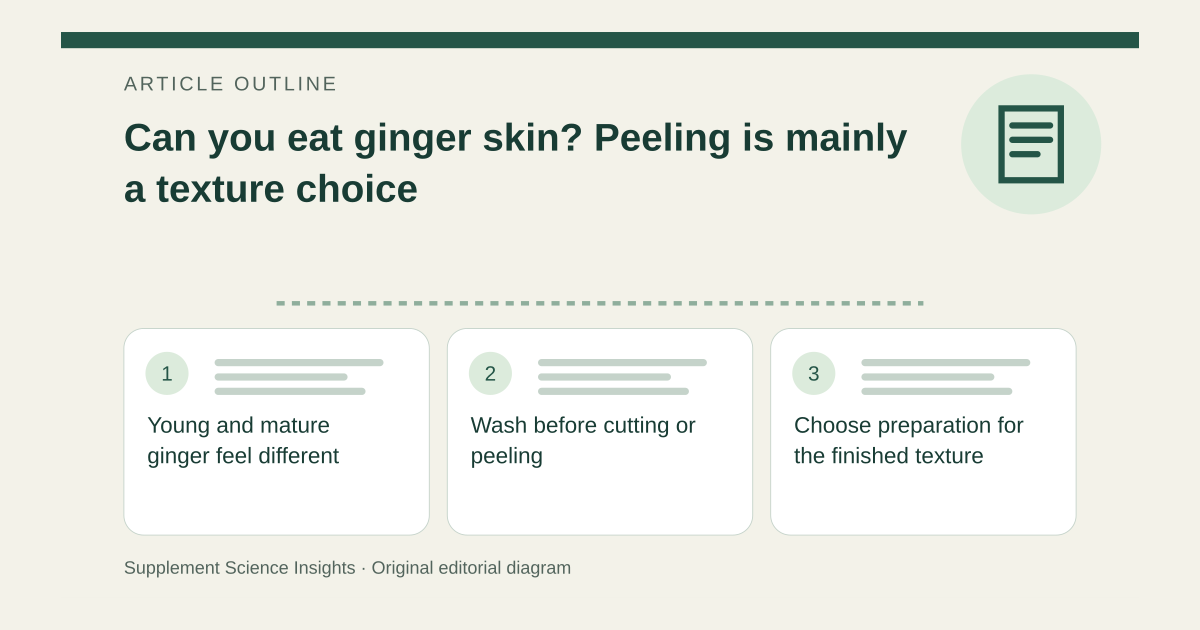
Young and mature ginger feel different
Iowa State Extension describes young ginger as thin-skinned and tender, while mature ginger is more fibrous with tougher skin. It explicitly treats skin removal as optional. Finely grated ginger and large raw slices therefore create different texture questions even when both use the same edible rhizome. [1]
Wash before cutting or peeling
FDA recommends washing produce under running water, even when the peel will be removed, because cutting can transfer material from the surface. Do not wash ginger with soap or household detergent. Washing reduces contamination; it is not a guarantee that spoiled or contaminated produce is safe. [2]
Choose preparation for the finished texture
Imagine finely grating clean, sound ginger into a cooked sauce: a little thin skin may be unnoticeable. For smooth candied slices or a delicate puree, scraping the skin can improve texture. Keeping the peel is a kitchen preference, not an established way to obtain a therapeutic nutrient dose. [1][3]
| Situation | Practical interpretation |
|---|---|
| Thin young skin | May be left on |
| Tough mature skin | Remove if the texture is unwelcome |
| Peeling planned | Still wash first |
Sources for this article
- Storing Fresh Ginger • AnswerLine • Iowa State University Extension and Outreach
Source consulted: 2026-09-20. This is a reference resource, not a claim that we conducted the studies or tested a product. - Selecting and Serving Produce Safely | FDA
Source consulted: 2026-09-20. This is a reference resource, not a claim that we conducted the studies or tested a product. - Ginger – Food Smart Colorado
Source consulted: 2026-09-20. This is a reference resource, not a claim that we conducted the studies or tested a product.