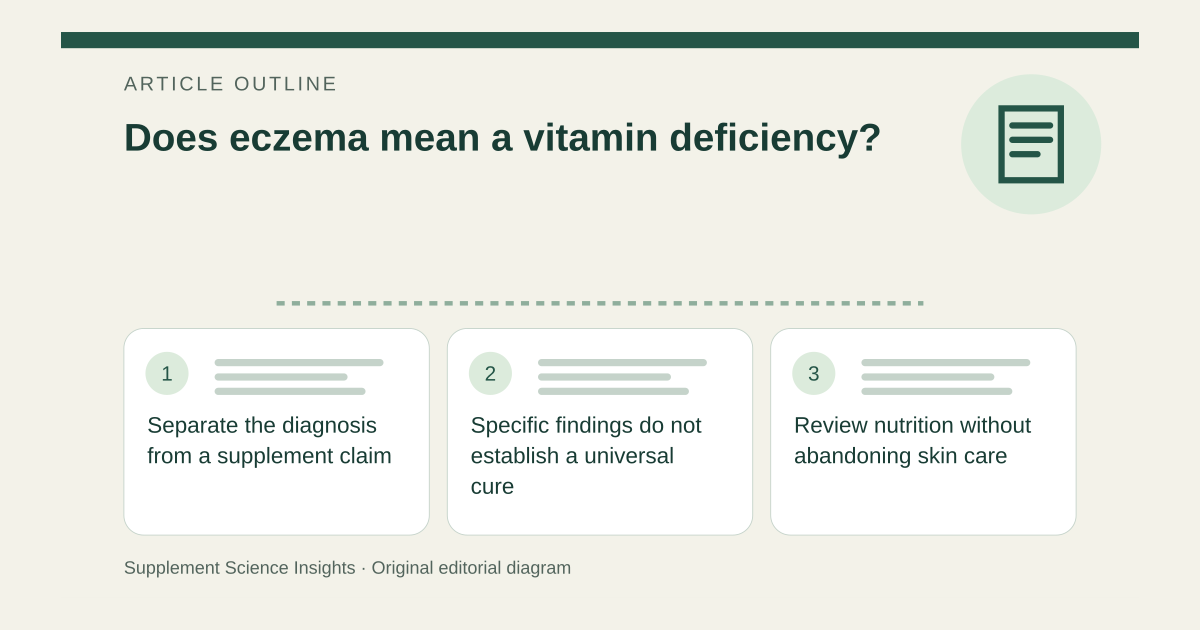
Separate the diagnosis from a supplement claim
AAD patient guidance finds insufficient evidence to recommend vitamins or minerals routinely for eczema. This does not mean deficiencies should be ignored; it means an eczema diagnosis alone does not identify a supplement that will treat it. [1]
Specific findings do not establish a universal cure
A benefit reported for a particular preparation or season cannot automatically be applied to every child or adult, every vitamin form or every eczema pattern. The existing vitamin-D winter trial page addresses that narrower research question separately. General care should remain tied to the person’s diagnosis and treatment plan. [1]
Review nutrition without abandoning skin care
Imagine a child’s eczema leads to multiple high-dose supplements. AAD advises discussing supplements with the child’s dermatologist because benefit, interactions and safety need review. Bring concerns about dietary restriction or deficiency to that discussion while continuing prescribed eczema care. [1]
| Situation | Useful distinction |
|---|---|
| Eczema diagnosis | Does not establish a deficiency |
| Confirmed nutrient problem | Treat for its own indication |
| Child using several supplements | Review with the treating clinician |
Sources for this article
- Can oils, probiotics, or vitamins heal eczema?
Source consulted: 2026-09-20. This is a reference resource, not a claim that we conducted the studies or tested a product.