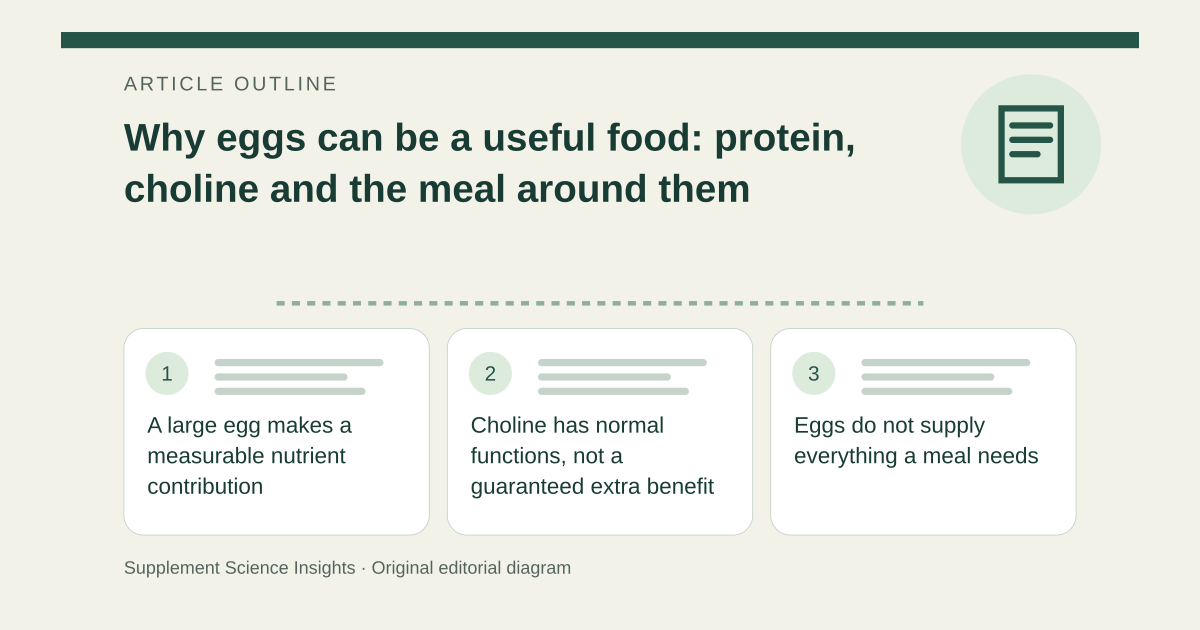
A large egg makes a measurable nutrient contribution
Using USDA’s historical raw whole-egg record and its 50 g large-egg portion, one egg supplies about 6.3 g protein and 147 mg choline. This is a reference calculation before additions or preparation changes, not a promise that every retail egg is identical. [1][2]
Choline has normal functions, not a guaranteed extra benefit
Choline is needed for cell-membrane components and acetylcholine production. Supplying a nutrient is not the same as proving that eating more eggs improves memory or treats disease. Adequacy and the overall dietary pattern remain the useful goals. [3]
Eggs do not supply everything a meal needs
The same reference record contains B12 and riboflavin but no vitamin C. Pairing eggs with other foods can broaden the nutrient contribution. Added ingredients and portion size also change the meal; an egg with vegetables and an egg in a heavily dressed sandwich are not identical meals. [1][4]
Cook and store them safely
FDA recommends refrigerating eggs and cooking them thoroughly. Use pasteurised eggs or egg products when a recipe will not receive adequate cooking. The raw reference entry is used for composition arithmetic, not as advice to eat raw eggs. [5]
Calculate the portion rather than exaggerating the benefit
Imagine a two-egg recipe with 100 g edible egg before cooking. The reference contribution is about 12.6 g protein and 294 mg choline; oil, cheese or other additions are counted separately. This helps plan a meal without turning a food into a treatment claim. [1]
| Example | Interpretation |
|---|---|
| One large reference egg | About 6.3 g protein and 147 mg choline |
| Two reference eggs | About 12.6 g protein and 294 mg choline |
| Recipe additions | Separate nutrient contribution |
Sources for this article
- USDA SR Legacy: raw ginger and whole egg nutrient records
Source consulted: 2026-09-20. This is a reference resource, not a claim that we conducted the studies or tested a product. - USDA FoodData Central — SR Legacy April 2018 composition and portion tables
Source consulted: 2026-09-20. This is a reference resource, not a claim that we conducted the studies or tested a product. - Choline - Health Professional Fact Sheet
Source consulted: 2026-09-20. This is a reference resource, not a claim that we conducted the studies or tested a product. - How to Understand and Use the Nutrition Facts Label | FDA
Source consulted: 2026-09-20. This is a reference resource, not a claim that we conducted the studies or tested a product. - What You Need to Know About Egg Safety | FDA
Source consulted: 2026-09-20. This is a reference resource, not a claim that we conducted the studies or tested a product.