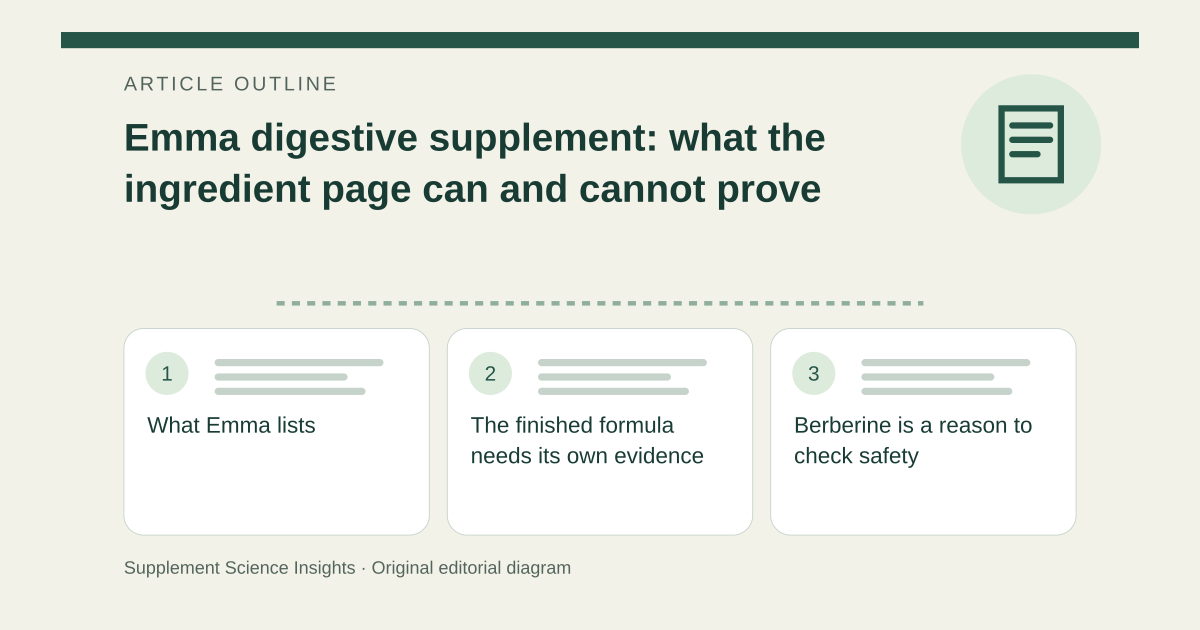
What Emma lists
The manufacturer highlights deglycyrrhizinated licorice, star anise, quercetin, berberine, chicory root inulin and resveratrol. It markets the combination for microbiome balance and digestive symptoms. These are manufacturer descriptions, not independent confirmation that the mixture produces the promised results. [1]
The finished formula needs its own evidence
A study on one component cannot establish how a multi-ingredient product performs at its actual doses. The inspected ingredient page does not supply an adequately described controlled trial of the finished formula for this review to appraise. Ask for the exact product, dose, comparison group, outcome and adverse-event data before accepting a broad success claim. [1][2]
Berberine is a reason to check safety
NCCIH reports gastrointestinal adverse effects including nausea, abdominal discomfort, constipation or diarrhea, along with medicine interactions. It also raises pregnancy, breastfeeding and infant safety concerns. A digestive-support label does not mean the product cannot worsen digestive symptoms or interact with treatment. [3]
Do not let a supplement replace a constipation plan
NIDDK describes management using suitable fiber and fluid intake, physical activity, bowel routines and medicines when needed. Persistent symptoms warrant assessment of causes and treatment response. Discuss possible medication contributors with a clinician rather than stopping medicines independently. [4]
Make the decision specific
Imagine someone taking several medicines wants to add Emma for constipation. The next useful step is a pharmacist review of the full label and a cause-based treatment plan. Whether an advertisement sounds convincing is less informative than verified formulation, safety and evidence on the actual symptom. [3][4][2]
| Check | Meaning |
|---|---|
| Named ingredients | Does not prove finished-product efficacy |
| Berberine component | Check adverse effects and interactions |
| Persistent constipation | Use a cause-based care plan |
Sources for this article
- Emma Gut Health Supplement Ingredients
Source consulted: 2026-09-20. This is a reference resource, not a claim that we conducted the studies or tested a product. - Dietary Supplements: What You Need to Know
Source consulted: 2026-09-20. This is a reference resource, not a claim that we conducted the studies or tested a product. - Berberine and Weight Loss: What You Need To Know | NCCIH
Source consulted: 2026-09-20. This is a reference resource, not a claim that we conducted the studies or tested a product. - NIDDK Treatment for Constipation
Source consulted: 2026-09-20. This is a reference resource, not a claim that we conducted the studies or tested a product.