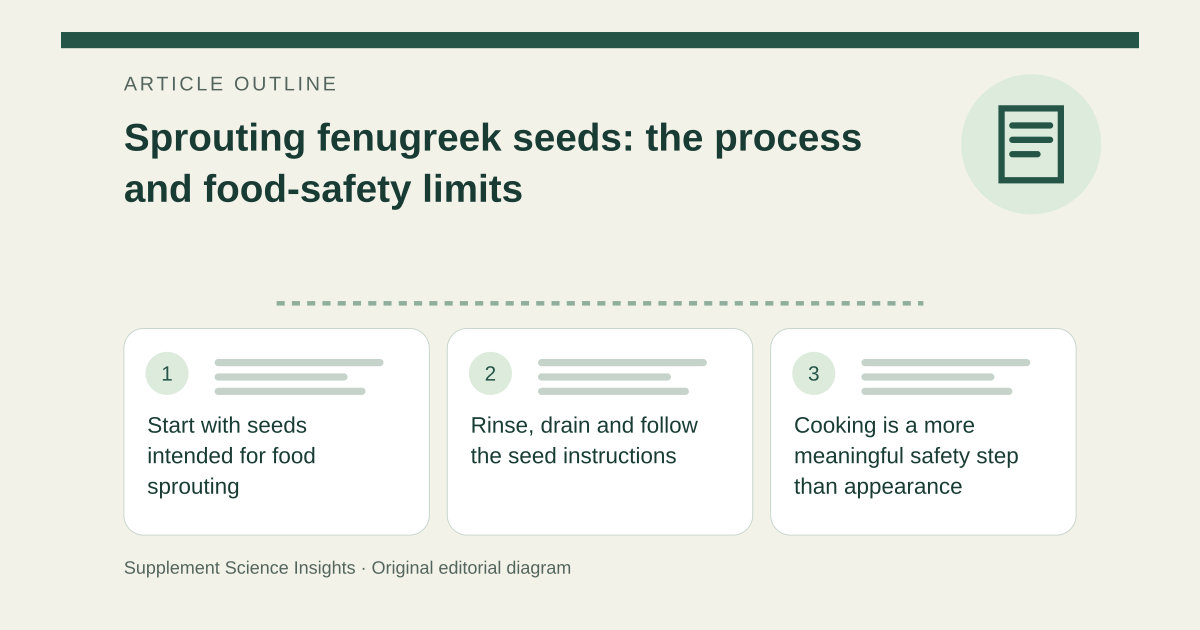
Start with seeds intended for food sprouting
NC State includes fenugreek among sproutable seeds. Its general method begins with washing and soaking, then transferring seeds to a clean, ventilated sprouting container. Use seeds supplied for edible sprouting, not chemically treated planting seed, and clean hands and equipment. [1][2]
Rinse, drain and follow the seed instructions
The extension method uses a six-to-eight-hour initial soak and regular rinsing during germination. Drain thoroughly after rinsing and follow the supplier’s instructions for the seed and equipment; growth time varies. The older guide’s warmer refrigerator range is not adopted here: keep harvested sprouts refrigerated at 40°F or below. [1][2]
Cooking is a more meaningful safety step than appearance
FDA explains that bacteria can be inside sprouting seeds and that washing does not eliminate the risk. Cook sprouts thoroughly; people at greater risk of foodborne illness should avoid raw sprouts. Imagine a clean-looking jar: neither appearance nor successful germination proves the sprouts are free of pathogens. [2][3]
| Item | Interpretation |
|---|---|
| Food-sprouting seed | Appropriate starting material |
| Warm moist germination | Also supports bacterial growth |
| Clean appearance | Not proof of microbial safety |
Sources for this article
- Bean Sprouts and Other Vegetable Seed Sprouts | NC State Extension Publications
Source consulted: 2026-09-20. This is a reference resource, not a claim that we conducted the studies or tested a product. - Selecting and Serving Produce Safely | FDA
Source consulted: 2026-09-20. This is a reference resource, not a claim that we conducted the studies or tested a product. - Sprouts - Food Source Information
Source consulted: 2026-09-20. This is a reference resource, not a claim that we conducted the studies or tested a product.