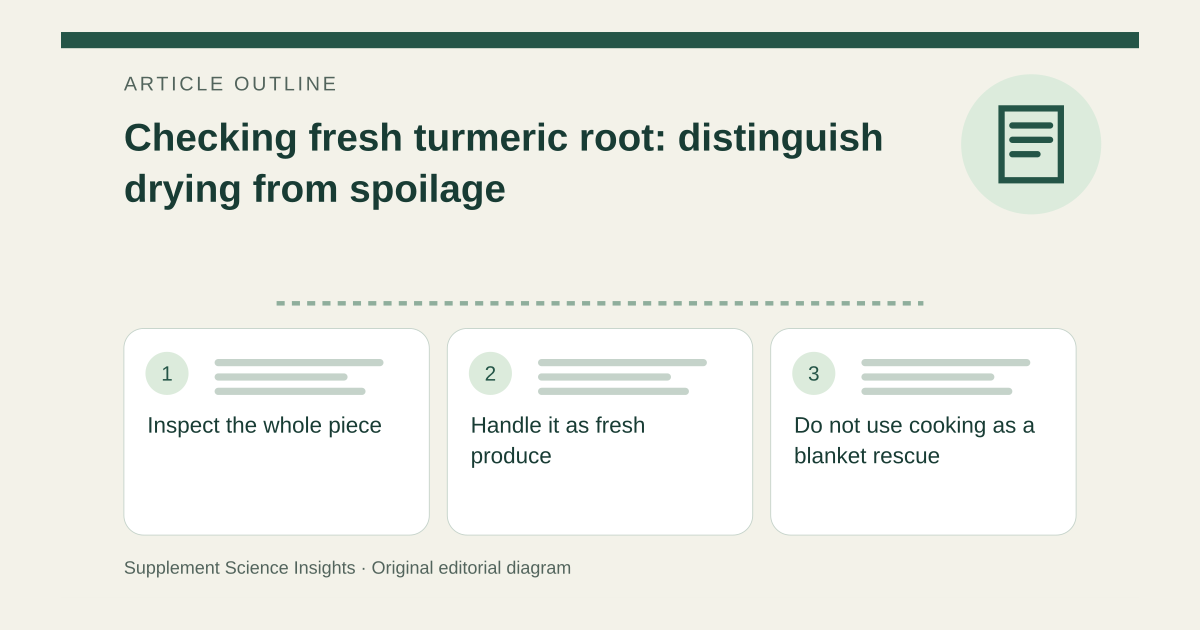
Inspect the whole piece
Look for obvious mold, leaking tissue, extensive soft decay or an abnormal odor before preparing fresh turmeric. A drier or wrinkled surface is a different observation from wet decomposition, but neither a photograph nor color alone can certify safety. Discard a clearly deteriorated piece rather than hiding it in a strongly flavored recipe. [1][2]
Handle it as fresh produce
Use clean hands and utensils, wash produce appropriately before cutting, and remove damaged areas when preparing otherwise sound produce. Refrigerate fresh-cut pieces promptly. These handling steps reduce avoidable contamination; they do not rescue an extensively rotten rhizome or establish a precise number of safe storage days. [2][3]
Do not use cooking as a blanket rescue
Imagine a turmeric piece sat cut on a warm counter and still smells normal. That sensory check does not establish safe handling. USDA explains that pathogens may grow without obvious changes. The reasonable decision uses both condition and storage history, and avoids taste-testing suspect produce to decide whether it is safe. [4]
| Example | What it means |
|---|---|
| Drying or wrinkling | A quality observation to assess |
| Extensive soft decay | Do not use the piece |
| Normal color after poor storage | Not proof of safety |
Sources for this article
- Turmeric: Usefulness and Safety | NCCIH
Source consulted: 2026-09-20. This is a reference resource, not a claim that we conducted the studies or tested a product. - How should fresh produce be washed before eating?
Source consulted: 2026-09-20. This is a reference resource, not a claim that we conducted the studies or tested a product. - Refrigerator Storage — Illinois Extension
Source consulted: 2026-09-20. This is a reference resource, not a claim that we conducted the studies or tested a product. - Refrigeration and Food Safety
Source consulted: 2026-09-20. This is a reference resource, not a claim that we conducted the studies or tested a product.