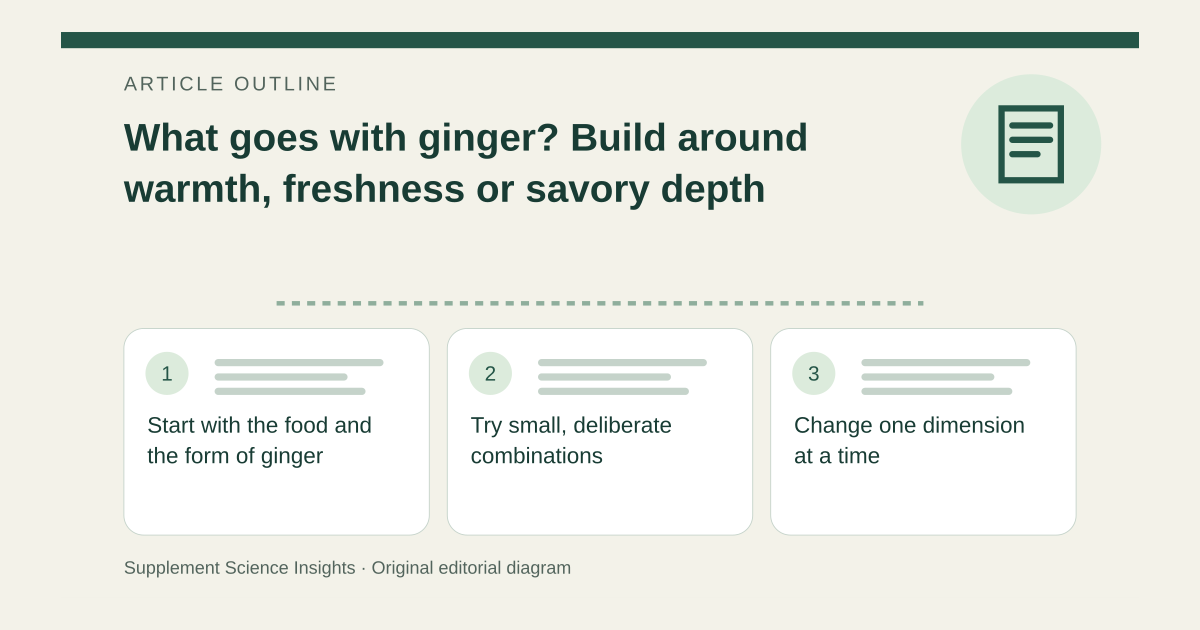
Start with the food and the form of ginger
Fresh ginger has an aromatic, pungent character; ground ginger is a concentrated dry spice and is not always a spoon-for-spoon substitute. Texas A&M identifies the rhizome as the main culinary part. A small amount in a sauce and the same amount in a large pot will have different effects on flavor. [1]
Try small, deliberate combinations
For an original sweet-flavor trial, combine ginger with a little cinnamon and citrus zest in a spoonful of a fruit mixture. For a savory trial, compare ginger with garlic and a little chili in a separate portion of a sauce. These are tasting suggestions, not fixed regional recipes or evidence that the ingredients improve health when combined. Colorado State’s pairing guide also places ginger with foods such as peas and winter squash. [2]
Change one dimension at a time
Imagine a soup tastes sharply of ginger but needs more depth. Test a spoonful with a small amount of another seasoning before adding it to the pot. Adding sugar, acid and chili all at once can obscure which change helped. Record the amount and form that suits your recipe; a flavor preference is not a supplement dose. [1][2]
| Choice | Practical interpretation |
|---|---|
| Sweet trial | Ginger, cinnamon and citrus zest |
| Savory trial | Ginger, garlic and chili |
| Adjust a small portion | Avoid over-seasoning the whole dish |
Sources for this article
- Ginger - Vegetable Resources Vegetable Resources
Source consulted: 2026-09-20. This is a reference resource, not a claim that we conducted the studies or tested a product. - Herbs: Using and Preserving – Food Smart Colorado
Source consulted: 2026-09-20. This is a reference resource, not a claim that we conducted the studies or tested a product.