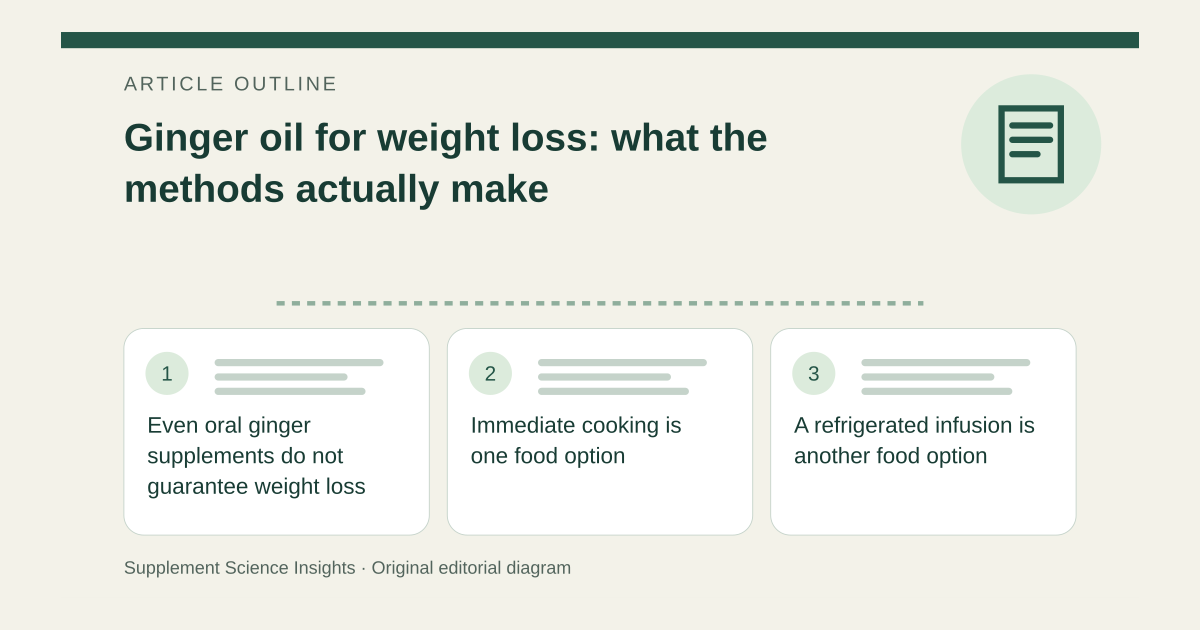
Even oral ginger supplements do not guarantee weight loss
A 2025 meta-analysis abstract reports no overall body-weight or BMI improvement. That cannot establish a benefit from applying oil to skin, inhaling it or adding an untested oil to water. Route-specific evidence would be needed. [1]
Immediate cooking is one food option
For an original culinary use, cook a small amount of clean chopped ginger in the oil used for a meal. Choose amounts for flavor and the recipe, not a purported fat-burning dose. The oil still contributes dietary energy. [2][3]
A refrigerated infusion is another food option
Put suitable clean ginger in a clean food container, cover with edible oil and refrigerate promptly. OSU says unvalidated homemade flavored oils should be used within four days or frozen. This does not make a shelf-stable essential oil or a medical product. [4]
Do not confuse a scent with a treatment
Imagine a slimming routine recommends swallowing essential oil because its smell seems stimulating. That is not evidence of fat loss and can be hazardous. Use evidence-based weight-management care when needed and keep concentrated oils to their intended labeled uses. [5][6]
| Method | Result |
|---|---|
| Cook into meal oil | Food flavor |
| Cold refrigerated infusion | Perishable flavored oil |
| Essential oil on skin | No established slimming benefit |
| Essential oil swallowed | Poisoning risk |
Sources for this article
- Impact of ginger supplementation on obesity indices and Adipokine profiles in adults: A GRADE-based systematic review and dose-response meta-analysis of randomized controlled trials.
Source consulted: 2026-09-21. This is a reference resource, not a claim that we conducted the studies or tested a product. - Storing Food for Safety and Quality — Pacific Northwest Extension PNW612
Source consulted: 2026-09-21. This is a reference resource, not a claim that we conducted the studies or tested a product. - How to Understand and Use the Nutrition Facts Label | FDA
Source consulted: 2026-09-21. This is a reference resource, not a claim that we conducted the studies or tested a product. - Herbs and vegetables in oil | OSU Extension Service
Source consulted: 2026-09-21. This is a reference resource, not a claim that we conducted the studies or tested a product. - Essential oils: Poisonous when misused | Poison Control
Source consulted: 2026-09-21. This is a reference resource, not a claim that we conducted the studies or tested a product. - Dietary Supplements for Weight Loss - NIH ODS Consumer
Source consulted: 2026-09-21. This is a reference resource, not a claim that we conducted the studies or tested a product.