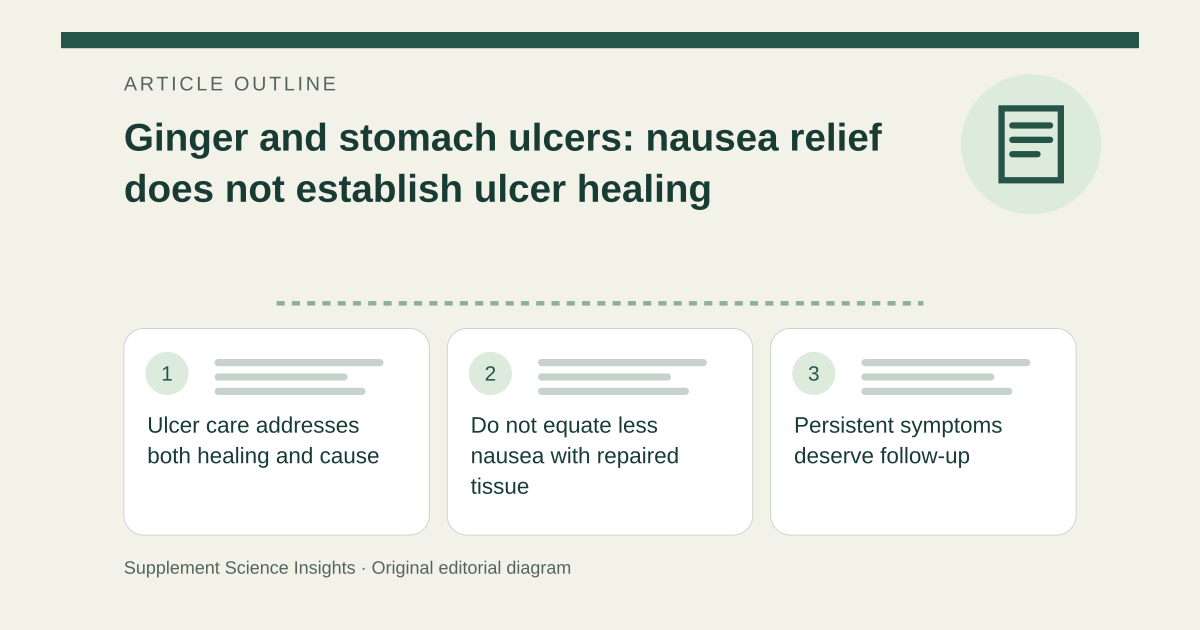
Ulcer care addresses both healing and cause
NIDDK describes acid-suppressing medicines and treatment of the underlying cause. H. pylori may require a prescribed combination of antibiotics and other medicines; an NSAID-related ulcer may require a change in pain treatment. Ginger is not included as an established replacement for these approaches. [1]
Do not equate less nausea with repaired tissue
NCCIH’s ginger summary describes nausea research, often with supplements rather than food, and possible gastrointestinal adverse effects. Neither a pleasant taste nor temporary relief establishes that an ulcer has healed. A preparation that triggers heartburn can be unsuitable for comfort even if it is sold for digestion. [2]
Persistent symptoms deserve follow-up
NIDDK advises reassessment when an ulcer does not heal or returns, including checking persistent H. pylori and reviewing treatment. Complete prescribed therapy and the recommended follow-up instead of judging success by symptoms alone. [1]
Review pain medicines as well as supplements
Imagine recurrent stomach pain while taking an NSAID and ginger capsules. Bring both to the appointment. The clinician may need to address the medicine contributing to injury, not just choose a different herbal product. [1][2]
| Situation | Implication |
|---|---|
| H. pylori ulcer | Eradication treatment and follow-up |
| NSAID-related ulcer | Review the pain-medicine plan |
| Ginger causes discomfort | Tolerance is not a healing test |
Sources for this article
- Treatment for Peptic Ulcers (Stomach or Duodenal Ulcers) - NIDDK
Source consulted: 2026-09-20. This is a reference resource, not a claim that we conducted the studies or tested a product. - Ginger: Usefulness and Safety | NCCIH
Source consulted: 2026-09-20. This is a reference resource, not a claim that we conducted the studies or tested a product.