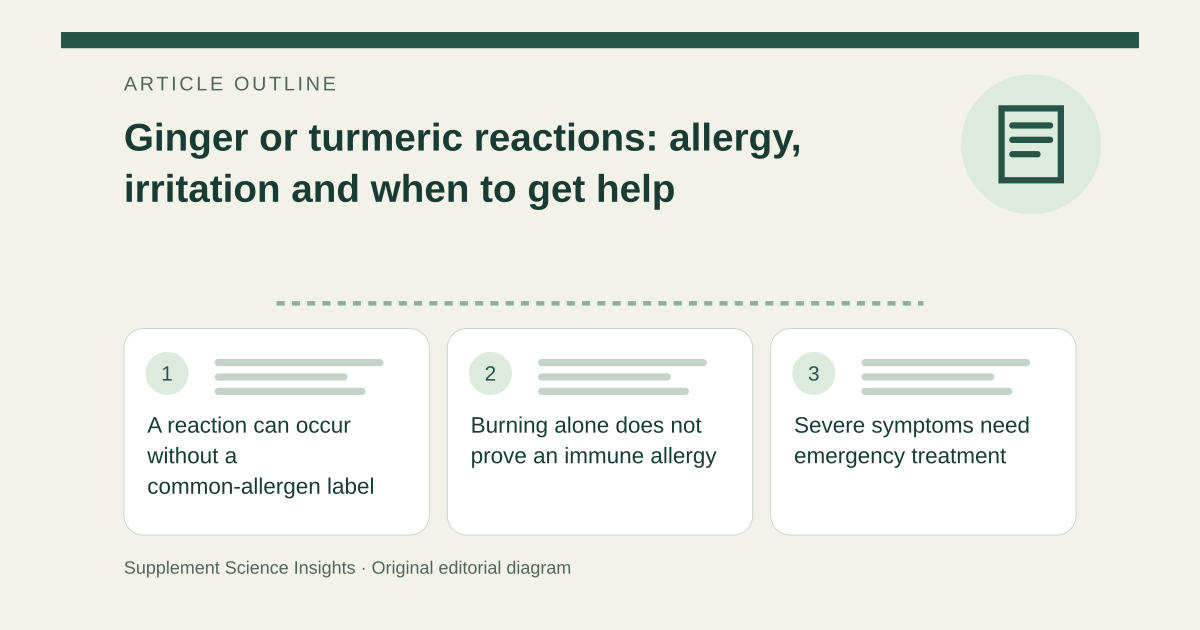
A reaction can occur without a common-allergen label
NHS notes that a person can be allergic to any food. MSK describes dermatitis with ginger, and NCCIH lists itching or hives with topical curcumin. These sources do not supply a reliable population rate for ginger or turmeric allergy, so they do not establish that either allergy is common. [1][2][3]
Burning alone does not prove an immune allergy
Ginger can irritate the mouth or throat and cause heartburn or digestive discomfort. Oral turmeric can also cause gastrointestinal effects. An allergy involves an immune response; symptoms, timing and examination help distinguish it from irritation or another cause. Do not keep using an irritating product to build tolerance on your own. [4][3][1]
Severe symptoms need emergency treatment
Sudden lip, tongue or throat swelling, trouble breathing or swallowing, faintness or collapse can indicate anaphylaxis. Use prescribed emergency adrenaline according to the action plan and call emergency services. Do not wait to see whether a home remedy or an antihistamine alone will resolve those symptoms. [5]
For a suspected non-emergency reaction, investigate the product
Stop the suspected product and seek advice before trying it again. Keep the ingredient list and a record of timing, amount and whether it was eaten or applied to skin. A blended supplement, tea or cosmetic can contain other triggers. A clinician may arrange allergy assessment and an individualized action plan. [1][6]
Do not diagnose from the spice name alone
Imagine a turmeric face product produces hives but contains fragrance and several plant extracts. The timing warrants stopping the product, but it does not identify turmeric as the sole cause. Bring the full formula to the assessment rather than deliberately challenging the skin again. [3][1]
| Pattern | Response |
|---|---|
| Burning after a strong preparation | Stop irritation and review symptoms |
| Hives or suspected allergy | Avoid re-exposure pending advice |
| Throat swelling or breathing difficulty | Emergency action |
Sources for this article
- Food allergy - NHS
Source consulted: 2026-09-21. This is a reference resource, not a claim that we conducted the studies or tested a product. - Ginger | Memorial Sloan Kettering Cancer Center
Source consulted: 2026-09-21. This is a reference resource, not a claim that we conducted the studies or tested a product. - Turmeric: Usefulness and Safety | NCCIH
Source consulted: 2026-09-21. This is a reference resource, not a claim that we conducted the studies or tested a product. - Ginger: Usefulness and Safety | NCCIH
Source consulted: 2026-09-21. This is a reference resource, not a claim that we conducted the studies or tested a product. - Anaphylaxis - NHS
Source consulted: 2026-09-21. This is a reference resource, not a claim that we conducted the studies or tested a product. - Botanical Dietary Supplements Background Information - Consumer
Source consulted: 2026-09-21. This is a reference resource, not a claim that we conducted the studies or tested a product.