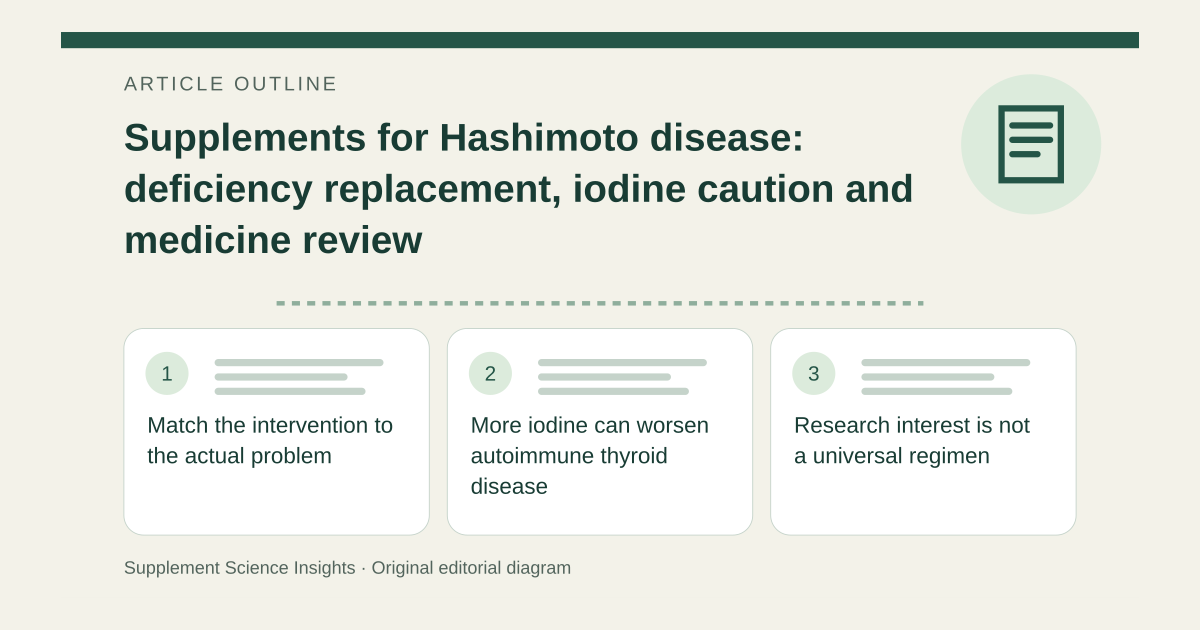
Match the intervention to the actual problem
Hashimoto disease can lead to an underactive thyroid. When hormone replacement is needed, nutritional supplements do not replace that hormone. An identified deficiency is a separate reason to consider a nutrient; the diagnosis alone does not establish that every listed supplement is necessary. [1]
More iodine can worsen autoimmune thyroid disease
NIDDK cautions that excess iodine from supplements and iodine-rich foods can cause or worsen hypothyroidism in susceptible people. Kelp-based thyroid support is therefore not an automatic fit. Pregnancy requires an individualized balance of adequate iodine without excess. [1]
Research interest is not a universal regimen
NIDDK notes research into vitamin D and selenium but does not supply a standard supplement prescription for Hashimoto disease. Do not interpret a change in one laboratory marker as proof that a product replaces hormone therapy or improves every meaningful outcome. [1][2]
Review botanicals, minerals and test interference separately
NCCIH discourages ashwagandha in autoimmune or thyroid disorders. NHS guidance also asks people using levothyroxine to disclose supplements: calcium and iron can matter for treatment, while biotin can affect thyroid-test results. These are different problems requiring different responses. [3][4]
Build a short list of reasons, not a large stack
Imagine a thyroid blend combines kelp, a mineral mixture, biotin and ashwagandha. The phrase thyroid support does not establish that any component is needed. Take the full label to the clinician and separate nutritional need, interaction risk and test interpretation before deciding what to use. [1][4][3]
| Ingredient or purpose | Question |
|---|---|
| Iodine or kelp | Could intake be excessive? |
| Calcium or iron | Does it affect the medicine schedule? |
| Biotin | Could it affect test interpretation? |
Sources for this article
- Hashimoto's Disease - NIDDK
Source consulted: 2026-09-20. This is a reference resource, not a claim that we conducted the studies or tested a product. - Dietary Supplements: What You Need to Know
Source consulted: 2026-09-20. This is a reference resource, not a claim that we conducted the studies or tested a product. - Ashwagandha: Usefulness and Safety | NCCIH
Source consulted: 2026-09-20. This is a reference resource, not a claim that we conducted the studies or tested a product. - Levothyroxine: a medicine for an underactive thyroid (hypothyroidism) - NHS
Source consulted: 2026-09-20. This is a reference resource, not a claim that we conducted the studies or tested a product.