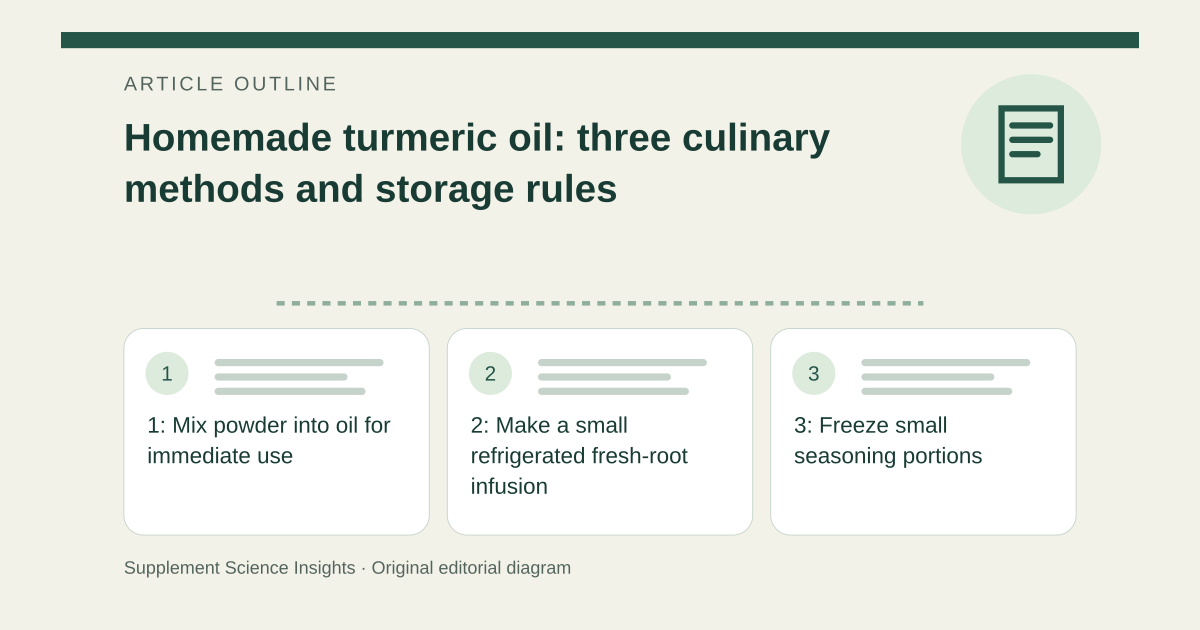
1: Mix powder into oil for immediate use
For a small culinary example, stir a pinch of food-grade turmeric powder into the amount of cooking oil already needed for your dish. Mix evenly and use it in that meal. Sediment is normal; this is a seasoning mixture rather than a purified extract. Choose the quantity for flavor rather than a supposed treatment dose. [1][2]
2: Make a small refrigerated fresh-root infusion
Wash the culinary rhizome, peel if desired and grate a small amount into a clean container with edible oil. Refrigerate immediately and use within four days, following Extension guidance for homemade vegetable and herb oils. Do not leave the jar in sunlight or on the counter to steep. Straining does not establish room-temperature safety. [1][3]
3: Freeze small seasoning portions
Mix prepared turmeric with edible oil, portion it into a clean freezer tray and freeze promptly. Transfer the frozen portions to an airtight labeled container for use in cooked dishes. This follows the Extension approach to freezing vegetable and herb oils; it does not produce a measured curcumin dose. [3]
Keep food oil separate from essential oil and cosmetics
Essential oil is obtained by different extraction processes and contains a different volatile mixture. These kitchen preparations are not instructions for skin treatment or drinking concentrated essential oil. Follow commercial product directions for its intended route rather than substituting one type of oil for another. [4][5]
Date the container when you make it
Imagine a jar made on Monday is placed in the refrigerator immediately. Label it with preparation and discard-or-freeze dates rather than waiting for a change in smell. If storage history is uncertain, do not assume that the turmeric or oil has preserved it safely. [3]
| Method | Storage decision |
|---|---|
| Powder mixed into recipe oil | Use in the meal |
| Fresh-root oil infusion | Refrigerate immediately; up to four days |
| Frozen seasoning portions | Freeze promptly in labeled airtight storage |
| Room-temperature jar | Not established safe by these methods |
Sources for this article
- Turmeric – Gardening Solutions
Source consulted: 2026-09-21. This is a reference resource, not a claim that we conducted the studies or tested a product. - Turmeric: Usefulness and Safety | NCCIH
Source consulted: 2026-09-21. This is a reference resource, not a claim that we conducted the studies or tested a product. - Herbs and vegetables in oil | OSU Extension Service
Source consulted: 2026-09-21. This is a reference resource, not a claim that we conducted the studies or tested a product. - Curcuma longa L. Rhizome Essential Oil from Extraction to Its Agri-Food Applications. A Review - PMC
Source consulted: 2026-09-21. This is a reference resource, not a claim that we conducted the studies or tested a product. - Essential oils: Poisonous when misused | Poison Control
Source consulted: 2026-09-21. This is a reference resource, not a claim that we conducted the studies or tested a product.