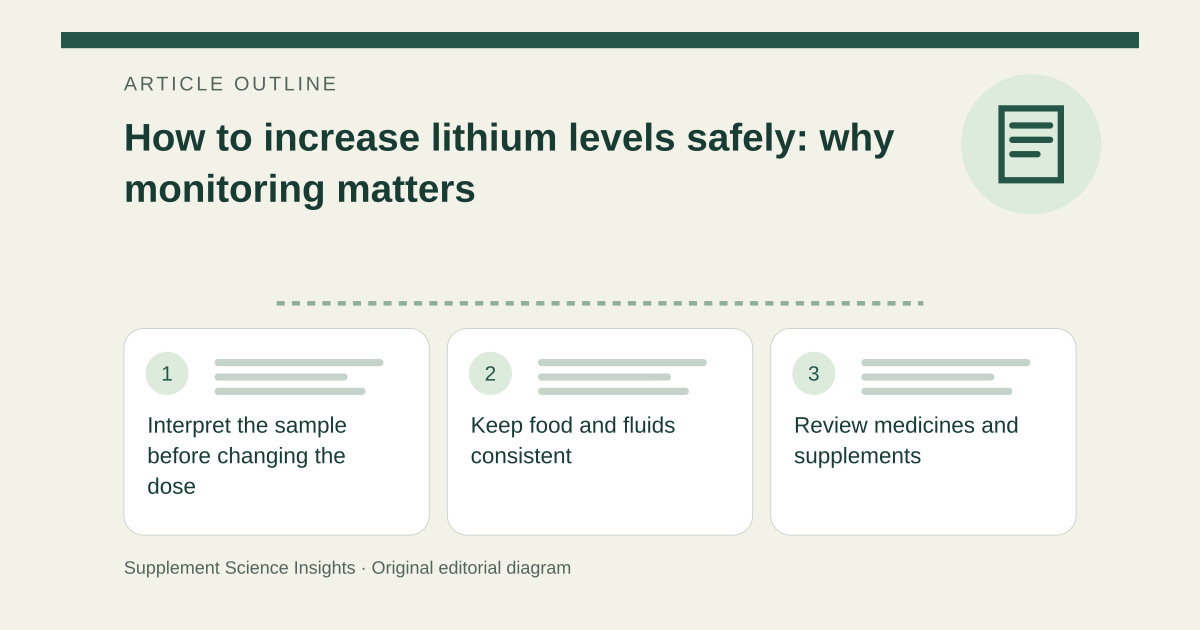
Interpret the sample before changing the dose
NHS monitoring guidance uses a timed trough sample, generally 12 hours after the last dose. A result taken at the wrong time can mislead. The prescriber decides whether a dose adjustment is appropriate, and different lithium formulations should not be exchanged without review. [1][2]
Keep food and fluids consistent
SPS advises adequate fluid intake and avoiding major changes in sodium intake. Illness with vomiting, diarrhea, fever or poor drinking can change lithium exposure and needs prompt advice. These effects are safety concerns, not tools for deliberately increasing a level. [2][1]
Review medicines and supplements
NSAIDs, diuretics and some blood-pressure medicines can affect lithium levels. Do not add an OTC lithium product or stop another medicine to adjust a laboratory result yourself. Monitoring also considers kidney function, thyroid function and calcium, not just lithium concentration. [3][2]
Respond promptly to possible toxicity
Imagine tremor, vomiting, unsteadiness or confusion develops while taking lithium. Seek urgent medical advice; suspected toxicity requires withholding lithium and urgent testing under clinical guidance. A previously normal level does not rule out a new problem. [2]
| Situation | Next consideration |
|---|---|
| Low measured level | Check sample timing and clinical context |
| Salt or fluid change | Do not manipulate exposure |
| New OTC medicine | Check interactions |
| Tremor or confusion | Urgent toxicity assessment |
Sources for this article
- How and when to take lithium - NHS
Source consulted: 2026-09-21. This is a reference resource, not a claim that we conducted the studies or tested a product. - Lithium monitoring – NHS SPS - Specialist Pharmacy Service – The first stop for professional medicines advice
Source consulted: 2026-09-21. This is a reference resource, not a claim that we conducted the studies or tested a product. - Taking lithium with other medicines and herbal supplements - NHS
Source consulted: 2026-09-21. This is a reference resource, not a claim that we conducted the studies or tested a product.