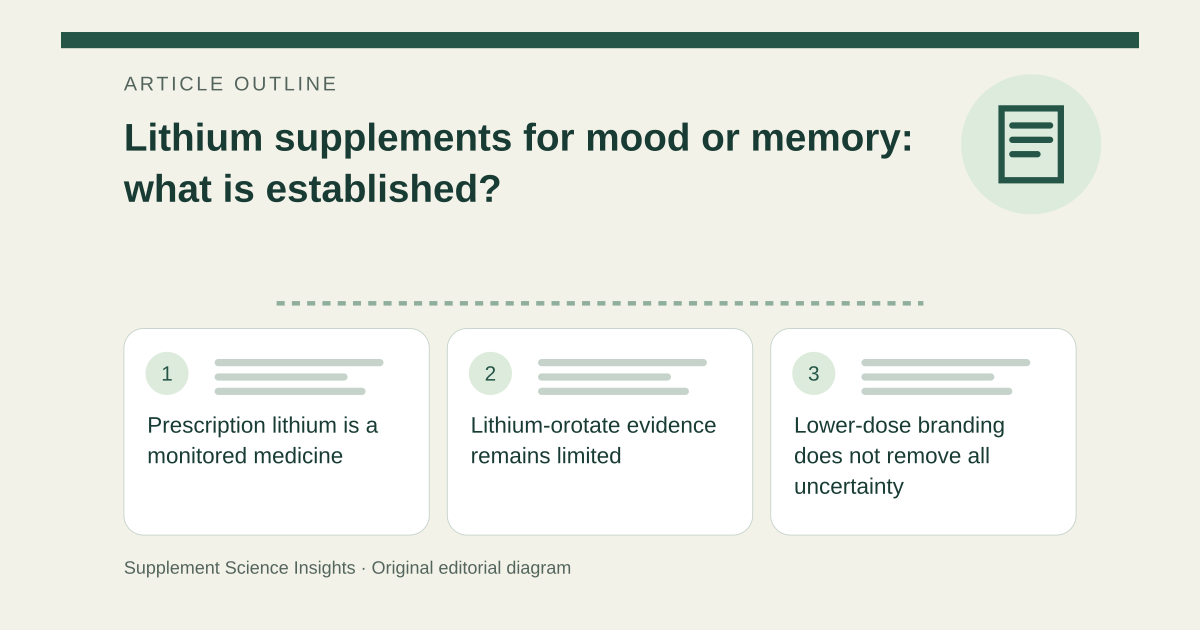
Prescription lithium is a monitored medicine
NIMH describes lithium among mood stabilizers used in bipolar disorder. NHS guidance requires dose and blood-level monitoring, with attention to kidney and other health risks. A supplement should not replace a prescribed regimen because it shares the word lithium. [1][2]
Lithium-orotate evidence remains limited
A 2021 review discusses theoretical delivery advantages and sparse animal and clinical literature, but does not recommend clinical substitution given the uncertainty about benefits and risks. Proposed neuroprotective mechanisms do not establish improved memory or prevention of cognitive decline from a retail product. [3]
Lower-dose branding does not remove all uncertainty
The amount of elemental lithium is different from the total weight of a lithium salt. Forms are not automatically interchangeable, and adding lithium to a prescribed regimen can complicate exposure. Kidney function, fluid balance and interacting medicines remain relevant. [3][2][4]
Assess the symptom before choosing the compound
Imagine worsening memory or mood prompts a lithium-orotate purchase. Seek assessment of the cause and review existing treatments rather than inferring a lithium deficiency. A trial of an unproven supplement can delay more useful diagnosis and care. [3][1][5]
| Situation | Next consideration |
|---|---|
| Prescription mood stabilizer | Defined indication and monitoring |
| Orotate research | Limited clinical certainty |
| Salt weight | Not elemental lithium weight |
| Memory concern | Needs assessment, not a deficiency assumption |
Sources for this article
- Bipolar Disorder - National Institute of Mental Health (NIMH)
Source consulted: 2026-09-21. This is a reference resource, not a claim that we conducted the studies or tested a product. - How and when to take lithium - NHS
Source consulted: 2026-09-21. This is a reference resource, not a claim that we conducted the studies or tested a product. - Lithium orotate: A superior option for lithium therapy? - PMC
Source consulted: 2026-09-21. This is a reference resource, not a claim that we conducted the studies or tested a product. - Taking lithium with other medicines and herbal supplements - NHS
Source consulted: 2026-09-21. This is a reference resource, not a claim that we conducted the studies or tested a product. - Dietary Supplements: What You Need to Know - Consumer
Source consulted: 2026-09-21. This is a reference resource, not a claim that we conducted the studies or tested a product.