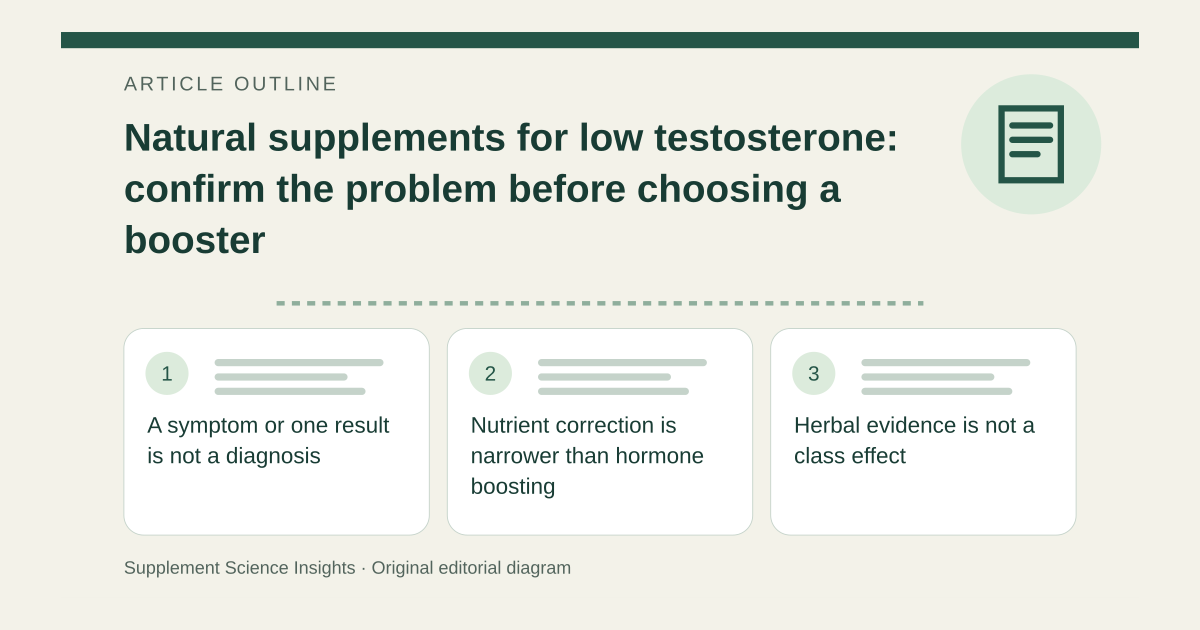
A symptom or one result is not a diagnosis
The Endocrine Society describes diagnosis using compatible symptoms plus at least two low early-morning testosterone measurements. Fatigue, sexual symptoms or reduced strength can have other explanations, and laboratory ranges vary. Review medicines and health history as part of the assessment. [1]
Nutrient correction is narrower than hormone boosting
Zinc is necessary for health, but taking more than needed is not a general substitute for endocrine care. Excess zinc can cause adverse effects, including interference with copper status. A deficiency-directed plan has a different purpose from a high-dose booster stack. [2]
Herbal evidence is not a class effect
NCCIH describes limited evidence that some ashwagandha preparations may affect testosterone or sperm quality. That does not establish treatment of every cause of low testosterone, and formulations differ. Ashwagandha also has safety concerns, including reported liver injury and cautions for thyroid conditions. [3]
Clinical treatment requires a fertility discussion
When testosterone therapy is appropriate for diagnosed hypogonadism, monitoring matters. It can reduce sperm production, so plans for children must be discussed before treatment. A goal of feeling stronger alone does not establish an indication for testosterone. [1]
Match the response to the finding
Imagine a low result was measured once during a period of poor health. Repeat appropriate testing and identify the cause before buying a mixture. If a dietary deficiency is found, correct that specific problem; do not assume it explains every symptom or that more supplementation is always better. [1][2][4]
| Situation | Useful next step |
|---|---|
| One low measurement | Confirm with an appropriate clinical assessment |
| Identified deficiency | Correct the specific nutrient problem |
| Fertility plans | Discuss before hormone treatment |
Sources for this article
- Hypogonadism in Men | Endocrine Society
Source consulted: 2026-09-20. This is a reference resource, not a claim that we conducted the studies or tested a product. - Zinc - Health Professional Fact Sheet
Source consulted: 2026-09-20. This is a reference resource, not a claim that we conducted the studies or tested a product. - Ashwagandha: Usefulness and Safety | NCCIH
Source consulted: 2026-09-20. This is a reference resource, not a claim that we conducted the studies or tested a product. - Dietary Supplements: What You Need to Know
Source consulted: 2026-09-20. This is a reference resource, not a claim that we conducted the studies or tested a product.