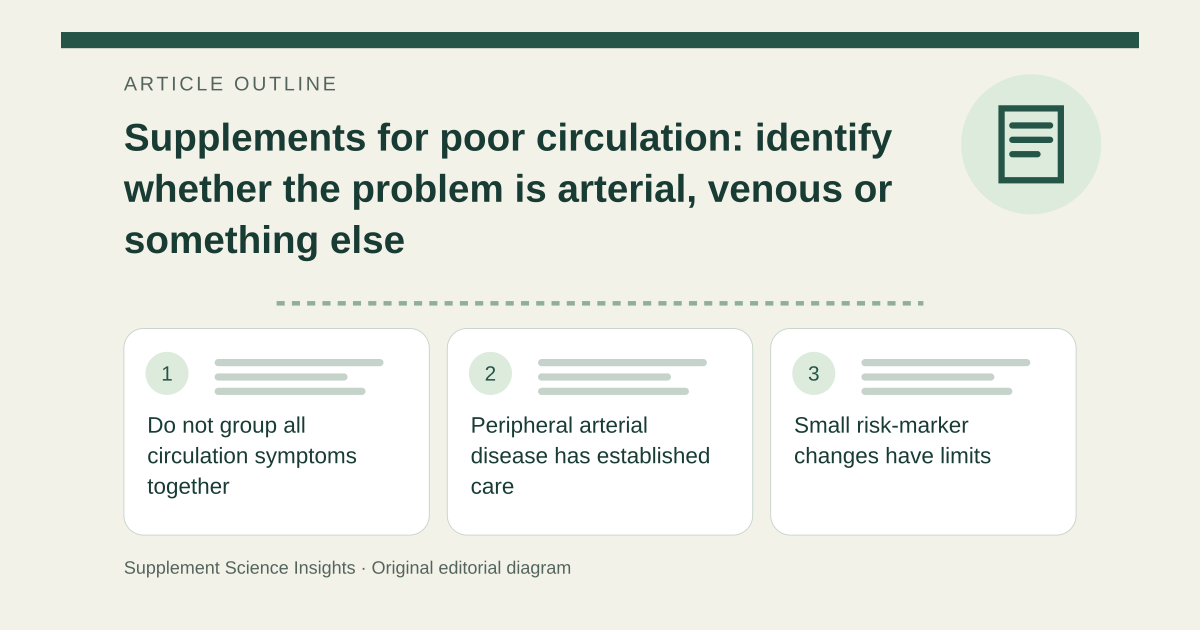
Do not group all circulation symptoms together
Leg pain linked to narrowed arteries is different from aching or swelling associated with varicose veins. The symptoms and examination determine the next step. A general circulation product cannot identify the cause. [1][2]
Peripheral arterial disease has established care
NHS guidance emphasizes supervised exercise and stopping smoking for PAD, alongside medicines to manage cardiovascular risk and prevent complications. Some people need procedures. These choices follow a diagnosis and are not interchangeable with an over-the-counter blend. [1]
Small risk-marker changes have limits
NCCIH describes possible small effects of some supplements on cholesterol or blood pressure. Those findings do not establish that a product reopens an obstructed artery, treats every circulation symptom or prevents a cardiovascular event in a particular person. [3]
Review products within the whole treatment plan
A product marketed for circulation may contain several active ingredients. Bring the label to a pharmacist or clinician, especially when already taking vascular medicines. Independent testing of contents does not demonstrate improved walking distance or blood flow. [4]
Use the symptom pattern to guide assessment
Imagine calf pain repeatedly appears while walking and eases with rest. Discuss that pattern rather than assuming a vitamin shortage. Someone whose main issue is swollen varicose veins needs a different assessment despite using the same phrase poor circulation. [1][2]
| Concern | Relevant distinction |
|---|---|
| Walking-related leg symptoms | Assess for an arterial cause |
| Swelling and varicose veins | Different vascular problem |
| Risk-marker improvement | Not proof of reopened arteries |
Sources for this article
- Peripheral arterial disease (PAD) - Treatment - NHS
Source consulted: 2026-09-20. This is a reference resource, not a claim that we conducted the studies or tested a product. - Varicose veins - NHS
Source consulted: 2026-09-20. This is a reference resource, not a claim that we conducted the studies or tested a product. - Cardiovascular Disease and Complementary Health Approaches | NCCIH
Source consulted: 2026-09-20. This is a reference resource, not a claim that we conducted the studies or tested a product. - Dietary Supplements: What You Need to Know
Source consulted: 2026-09-20. This is a reference resource, not a claim that we conducted the studies or tested a product.