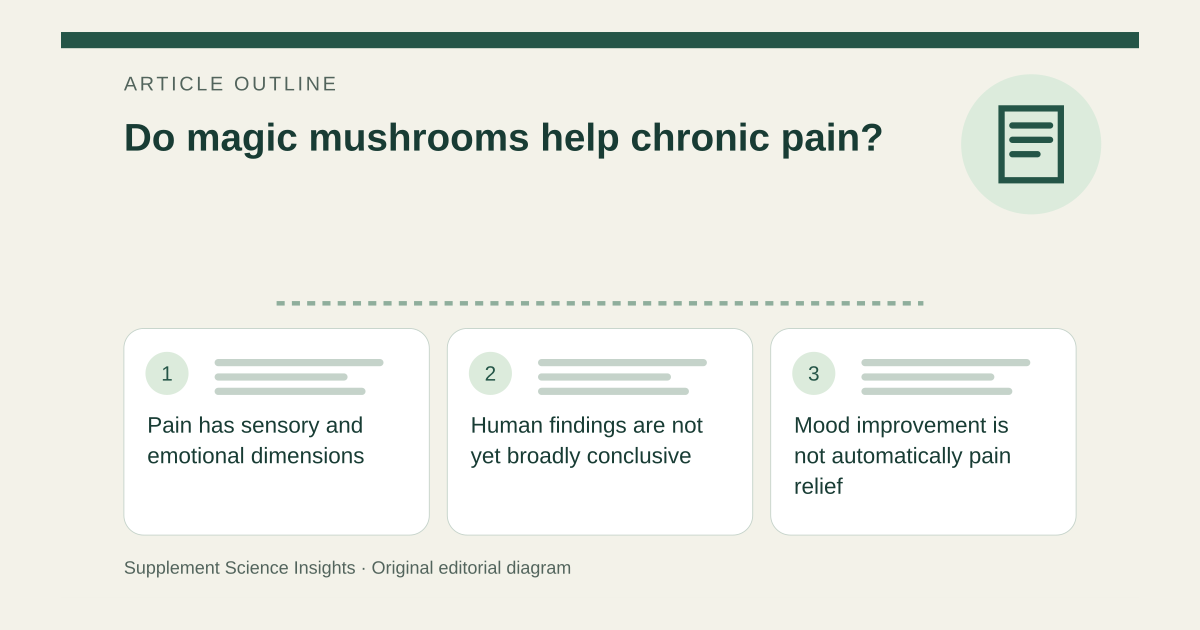
Pain has sensory and emotional dimensions
Research explores whether serotonin signaling, psychological flexibility and altered pain processing might change the experience of chronic pain. These are plausible research pathways, not proof that psilocybin repairs a damaged nerve or treats the underlying disease. [1]
Human findings are not yet broadly conclusive
A narrative review describes limited clinical studies alongside substantial preclinical work. Headache disorders, neuropathic pain, fibromyalgia and cancer-related distress are different populations and outcomes. Benefit in one setting cannot establish an effective treatment for another. [1]
Mood improvement is not automatically pain relief
A study measuring depression, anxiety or quality of life may be valuable without proving an analgesic effect. Larger controlled trials with pain and functional outcomes are needed. The review declared no external funding or conflicts, but that does not remove limitations in the underlying studies. [1]
Keep the existing pain-care plan in view
Imagine someone with neuropathy reads a positive psychedelic account from a person with cluster headache. It is not evidence to stop prescribed treatment. Discuss research participation and established options with the treating team. [2]
| Finding | Question still open |
|---|---|
| Animal pain response | Human clinical benefit |
| Better mood | Pain and function |
| Headache study | Other chronic-pain diagnoses |
| Promising mechanism | Safe effective treatment regimen |
Sources for this article
- Psilocybin and Chronic Pain: A New Perspective for Future Pain Therapists? - PMC
Source consulted: 2026-09-21. This is a reference resource, not a claim that we conducted the studies or tested a product. - Psilocybin for Mental Health and Addiction: What You Need To Know | NCCIH
Source consulted: 2026-09-21. This is a reference resource, not a claim that we conducted the studies or tested a product.