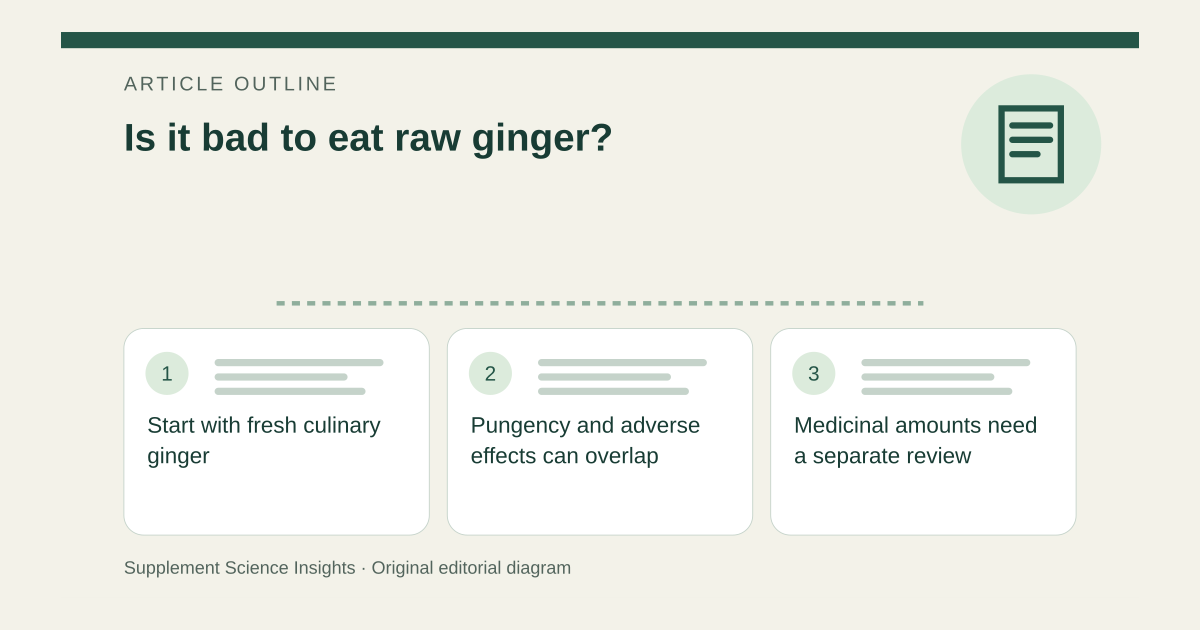
Start with fresh culinary ginger
Use correctly identified food ginger and discard moldy or rotten material. Wash before preparing it and cut or grate a small amount for food. A large raw portion is not necessary to obtain flavor, and ornamental or wild plants called ginger are not interchangeable. [1]
Pungency and adverse effects can overlap
NCCIH lists mouth/throat irritation, heartburn, abdominal discomfort and diarrhea among ginger’s possible effects. Burning is not evidence of detoxification. Reduce or stop a preparation that aggravates symptoms instead of trying to build tolerance through larger portions. [2]
Medicinal amounts need a separate review
A capsule or concentrated shot can provide a different exposure from seasoning a meal. MSK flags bleeding and medication concerns with supplements. Discuss medicinal use with the treating team, especially with relevant medicines or pregnancy. [2][3]
Change the food preparation when needed
Imagine raw grated ginger repeatedly irritates the mouth. Using less, diluting it into a meal or choosing another flavor is reasonable; cooking does not promise removal of every possible reaction. Stop and seek advice for concerning symptoms rather than assuming all reactions are normal spice heat. [2]
| Situation | Response |
|---|---|
| Small food amount tolerated | Optional culinary use |
| Burning or heartburn | Reduce or stop |
| Concentrated supplement | Separate safety review |
| Spoiled material | Discard |
Sources for this article
- Storing Food for Safety and Quality — Pacific Northwest Extension PNW612
Source consulted: 2026-09-21. This is a reference resource, not a claim that we conducted the studies or tested a product. - Ginger: Usefulness and Safety | NCCIH
Source consulted: 2026-09-21. This is a reference resource, not a claim that we conducted the studies or tested a product. - Ginger | Memorial Sloan Kettering Cancer Center
Source consulted: 2026-09-21. This is a reference resource, not a claim that we conducted the studies or tested a product.