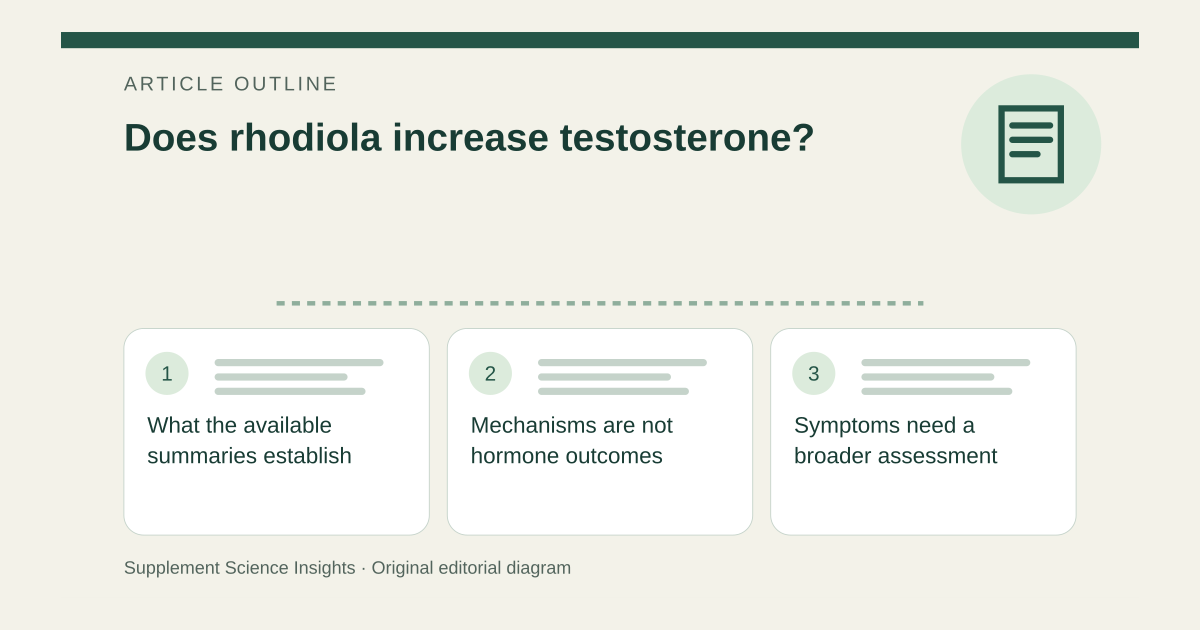
What the available summaries establish
NCCIH finds insufficient reliable evidence to determine whether rhodiola is useful for any health-related purpose. MSK describes limited clinical findings in selected settings. Neither source establishes rhodiola as a dependable testosterone-raising treatment. [1][2]
Mechanisms are not hormone outcomes
Laboratory findings about oxidative stress or neurotransmitter-related enzymes do not prove that an oral retail extract raises testosterone, improves fertility or treats a hormone disorder. Different species, extracts and blends cannot be assumed equivalent. [2][3]
Symptoms need a broader assessment
Fatigue and reduced sexual interest can have several explanations. Discuss persistent symptoms and whether testing is appropriate instead of diagnosing low testosterone from symptoms or starting a supplement stack. Rhodiola can cause adverse effects and may interact with medicines. [1][3]
Interpret a personal change cautiously
Imagine someone feels more alert after taking rhodiola. That experience does not establish a testosterone increase or identify which ingredient caused the change. Use the intended clinical outcome and appropriate assessment to judge a treatment. [1][3]
| Question | Interpretation |
|---|---|
| More energy | Not a hormone test |
| Adaptogen label | Not proven hormone treatment |
| Persistent symptoms | Seek assessment |
| Extract change | Evidence may not transfer |
Sources for this article
- Rhodiola: Usefulness and Safety | NCCIH
Source consulted: 2026-09-21. This is a reference resource, not a claim that we conducted the studies or tested a product. - Rhodiola | Memorial Sloan Kettering Cancer Center
Source consulted: 2026-09-21. This is a reference resource, not a claim that we conducted the studies or tested a product. - Dietary Supplements: What You Need to Know
Source consulted: 2026-09-21. This is a reference resource, not a claim that we conducted the studies or tested a product.