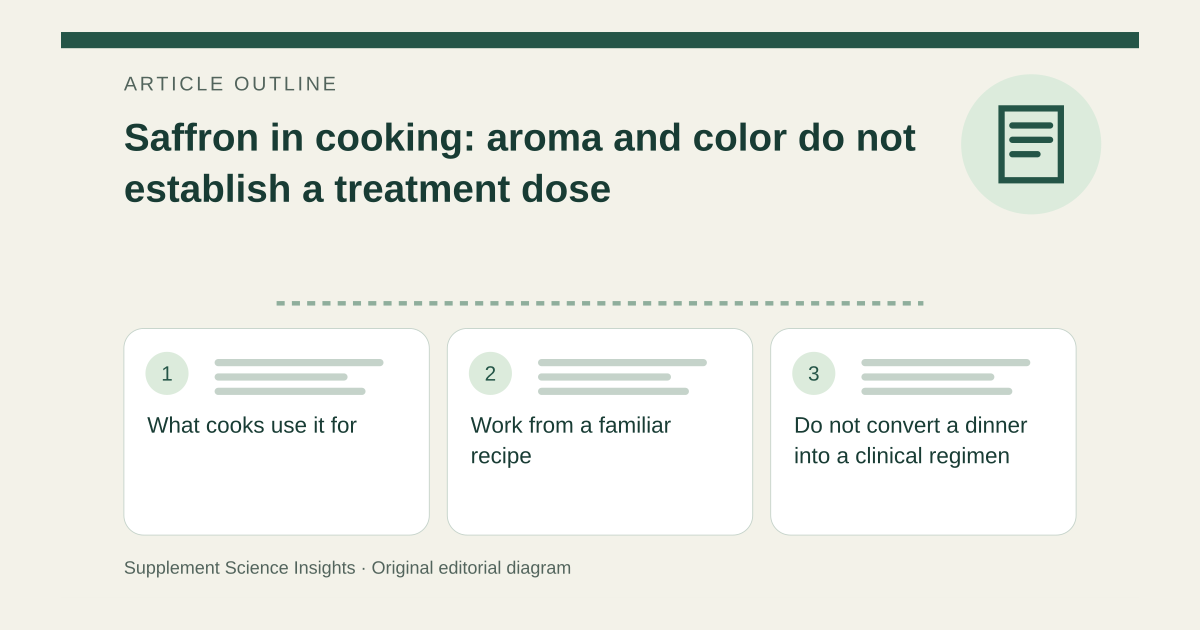
What cooks use it for
The dried stigmas of Crocus sativus are used for distinctive aroma, flavor and yellow color. UVM Extension identifies yellow rice and bouillabaisse as examples. A little ingredient distributed through a dish is a culinary decision, not an automatic equivalent of a standardized extract capsule. [1]
Work from a familiar recipe
Use a trusted recipe’s amount and preparation method, measuring the ingredient before adding it. Keep the remaining spice sealed and away from heat and moisture. If substituting another yellow spice, expect a different flavor; matching the color alone does not reproduce saffron. The storage advice concerns quality, not laboratory authentication. [2][1]
Do not convert a dinner into a clinical regimen
Imagine a recipe divides a small saffron addition among four servings. That does not establish each serving’s concentration of every constituent or predict an effect on mood or sleep. Clinical questions require evidence for the actual formulation and population. This culinary article does not prescribe a supplement or treat historical use as proof. [1]
| Hypothetical use | Evidence boundary |
|---|---|
| Rice or soup seasoning | Culinary purpose |
| Yellow-spice substitution | Color may match while flavor differs |
| Claimed mood or sleep effect | Requires separate clinical evidence |
Sources for this article
- Saffron: World's Most Expensive Spice | University of…
Source consulted: 2026-09-20. This is a reference resource, not a claim that we conducted the studies or tested a product. - Storing Herbs and Spices — UC Cooperative Extension
Source consulted: 2026-09-20. This is a reference resource, not a claim that we conducted the studies or tested a product.