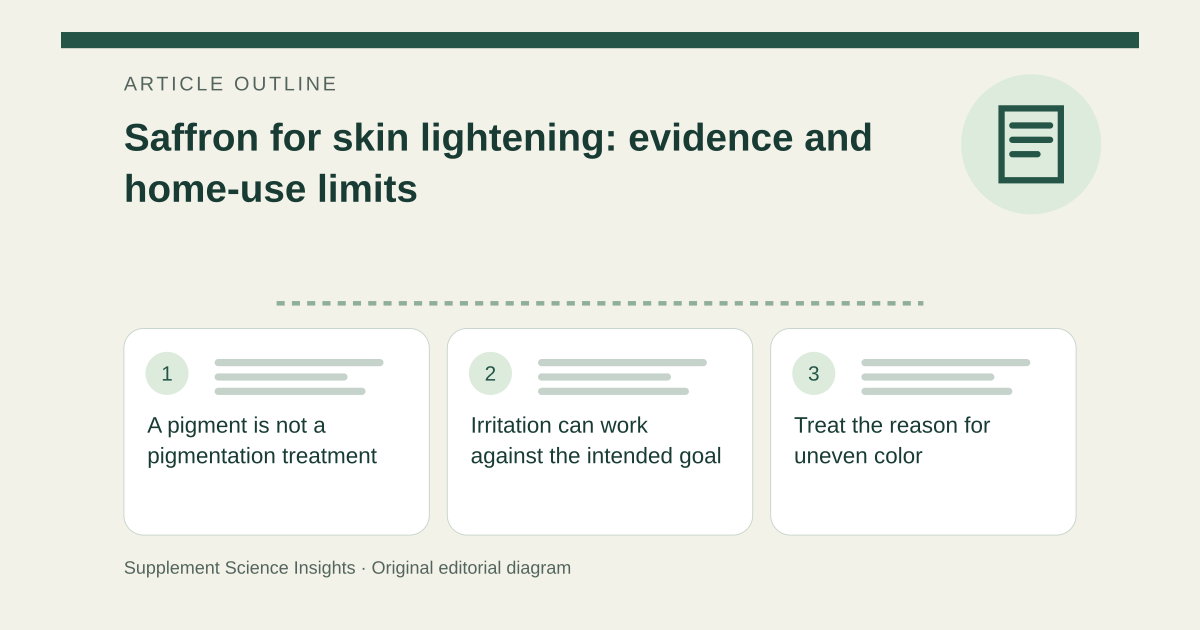
A pigment is not a pigmentation treatment
Saffron has historically been used as a dye as well as a spice. A yellow tint left by a preparation does not show a change in melanin or lasting improvement of dark spots. A culinary ingredient and a tested skin-care formulation are different products. [1][2]
Irritation can work against the intended goal
AAD notes that irritating products and skin injury can contribute to dark marks. Avoid harsh homemade mixtures, scrubbing or applying concentrated preparations to irritated skin. Stop a product that burns or produces a rash. [3][4]
Treat the reason for uneven color
Acne marks, melasma and other pigmentation concerns do not all need the same approach. AAD emphasizes sun protection and suitable treatment for the cause. A dermatologist can help choose an option appropriate to the skin and diagnosis. [3]
Do not mistake a cosmetic experiment for proof
Imagine a saffron mask changes the surface color for an evening. That observation cannot establish long-term lightening or safety. There is no validated home whitening dose or schedule in the inspected evidence. [1][4]
| Observation | Limit |
|---|---|
| Yellow tint | May be deposited pigment |
| Burning | Possible irritation |
| Dark marks persist | Assess their cause |
| Natural ingredient | Not a proven lightening treatment |
Sources for this article
- Saffron: a Cambridge spice | University of Cambridge
Source consulted: 2026-09-21. This is a reference resource, not a claim that we conducted the studies or tested a product. - Dietary Supplements: What You Need to Know
Source consulted: 2026-09-21. This is a reference resource, not a claim that we conducted the studies or tested a product. - How to fade dark spots in darker skin tones
Source consulted: 2026-09-21. This is a reference resource, not a claim that we conducted the studies or tested a product. - How to test skin care products
Source consulted: 2026-09-21. This is a reference resource, not a claim that we conducted the studies or tested a product.