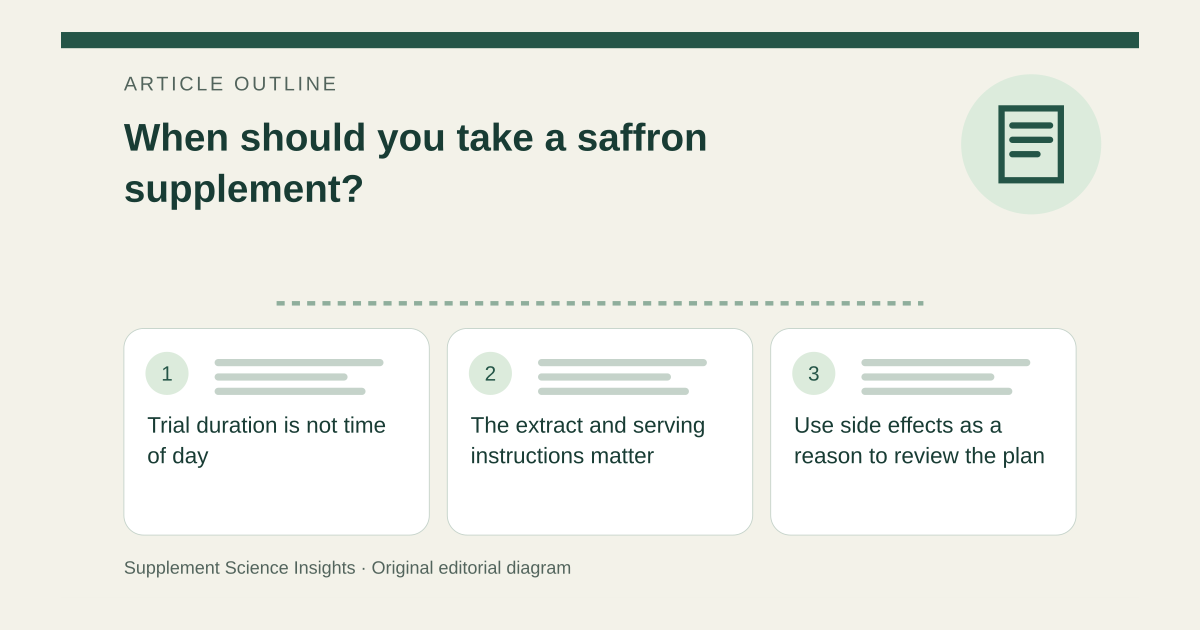
Trial duration is not time of day
Mood studies generally assess change over weeks. The 2026 review included interventions lasting at least four weeks; that design does not prove morning dosing is better or identify an immediate effect after each capsule. [1]
The extract and serving instructions matter
Different powders, extracts and combination products can deliver different constituents. Do not move between a tincture, food threads and capsules using an assumed equivalent amount. If a schedule is prescribed or recommended for a particular product, follow that plan. [2]
Use side effects as a reason to review the plan
The safety review describes gastrointestinal and other reported symptoms. If use is followed by discomfort, insomnia or agitation, ask about stopping or changing the product rather than simply moving it to bedtime. Do not double a missed serving without product-specific advice. [3]
Set a review point rather than a special clock rule
Imagine someone takes saffron for mood and expects an effect before breakfast. Discuss the intended outcome, monitoring and when to reassess with the clinician. Continue appropriate care if symptoms worsen instead of waiting for a supposedly ideal dosing time. [4][2]
| Question | Useful focus |
|---|---|
| Morning or evening? | Specific directions and tolerance |
| How quickly? | Weeks-based evidence, no guarantee |
| Missed serving? | Do not improvise doubling |
| Mood worsening? | Clinical review |
Sources for this article
- Effect of saffron on depression, anxiety and mood disorder: a GRADE assessed systematic review and meta-analysis of 34 randomized controlled trials.
Source consulted: 2026-09-21. This is a reference resource, not a claim that we conducted the studies or tested a product. - Dietary Supplements: What You Need to Know
Source consulted: 2026-09-21. This is a reference resource, not a claim that we conducted the studies or tested a product. - Adverse Events of Saffron (Crocus sativus L.): Systematic Review of Current Evidence - PMC
Source consulted: 2026-09-21. This is a reference resource, not a claim that we conducted the studies or tested a product. - Treatment - Depression in adults - NHS
Source consulted: 2026-09-21. This is a reference resource, not a claim that we conducted the studies or tested a product.