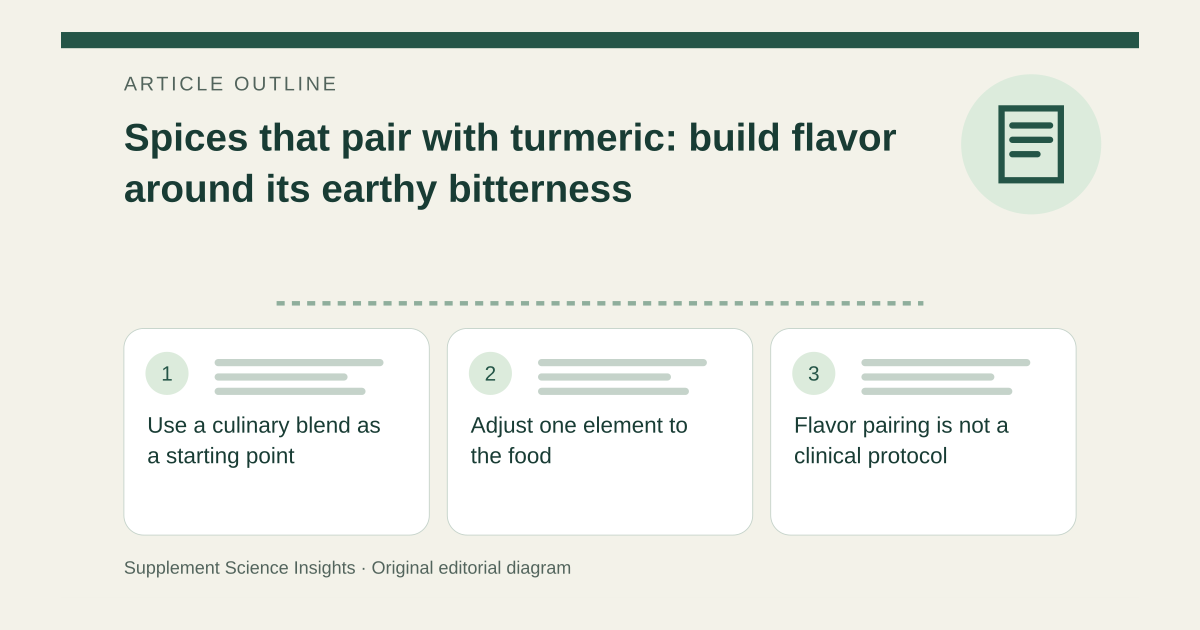
Use a culinary blend as a starting point
UMass Extension includes turmeric with cumin, ground coriander and cardamom in a curry seasoning. UF describes turmeric as pungent and somewhat bitter, used in rice, curry and egg dishes. Those flavor roles explain why supporting aromatics can make a blend more balanced than simply adding more turmeric. [1][2]
Adjust one element to the food
For an original kitchen variation, try cumin and coriander with turmeric in lentils, or a little cardamom in a rice dish. Taste a small portion before seasoning the entire pot. Spice freshness and the recipe’s fat, acidity and salt change the final impression, so there is no universal best ratio for every meal. [1][2]
Flavor pairing is not a clinical protocol
Imagine a pleasant turmeric blend is described as an anti-inflammatory treatment. Enjoying that blend does not establish a standardized curcumin exposure or a clinical outcome. NCCIH’s evidence cautions about turmeric products should not be replaced by assumptions based on how flavorful a meal tastes. [3]
| Situation | Practical interpretation |
|---|---|
| Cumin and coriander | Useful savory partners |
| Cardamom | An aromatic option in a blend |
| Enjoyable flavor | Not proof of therapeutic potency |
Sources for this article
- Make-Your-Own Seasoning Blends : Center for Agriculture, Food, and the Environment (CAFE) at UMass Amherst
Source consulted: 2026-09-20. This is a reference resource, not a claim that we conducted the studies or tested a product. - FSHN13-03/FS225: Shopping for Health: Herbs and Spices
Source consulted: 2026-09-20. This is a reference resource, not a claim that we conducted the studies or tested a product. - Turmeric: Usefulness and Safety | NCCIH
Source consulted: 2026-09-20. This is a reference resource, not a claim that we conducted the studies or tested a product.