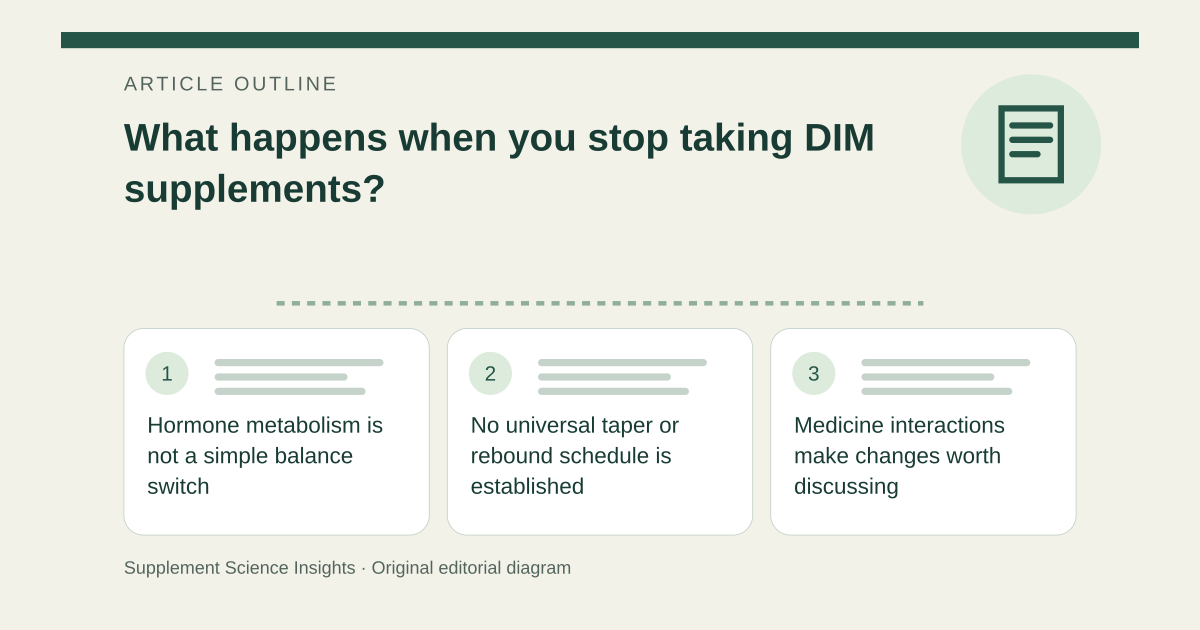
Hormone metabolism is not a simple balance switch
MSK describes small studies showing changes in estrogen-metabolite patterns. These findings do not establish a universal treatment for acne, cycle symptoms or an alleged estrogen imbalance. They also do not predict exactly what happens after every person stops taking DIM. [1]
No universal taper or rebound schedule is established
The clinical summary does not supply a validated general discontinuation protocol. If DIM was included in a clinician-directed plan, discuss the reason for stopping and follow-up. Do not infer that a symptom returning proves dependence on the supplement. [1][2]
Medicine interactions make changes worth discussing
MSK highlights altered tamoxifen metabolites and other potential interactions. Pregnancy, breastfeeding and hormonal contraception also require caution. Starting or stopping a supplement should be communicated to the treating clinician when it may affect the broader regimen. [1]
Use a timeline without assuming causation
Imagine skin or menstrual symptoms change after DIM is stopped. Record other medicines, cycle timing and product ingredients and seek appropriate assessment. Repeatedly restarting DIM to chase symptoms can delay identifying the underlying cause. [1][2]
| Claim or question | Evidence boundary |
|---|---|
| Metabolite change | Not proof of hormone correction |
| Symptoms return | Not established withdrawal |
| Tamoxifen or hormones | Discuss the full regimen |
| Persistent symptoms | Assess the cause |
Sources for this article
- Diindolylmethane | Memorial Sloan Kettering Cancer Center
Source consulted: 2026-09-21. This is a reference resource, not a claim that we conducted the studies or tested a product. - Dietary Supplements: What You Need to Know - Consumer
Source consulted: 2026-09-21. This is a reference resource, not a claim that we conducted the studies or tested a product.