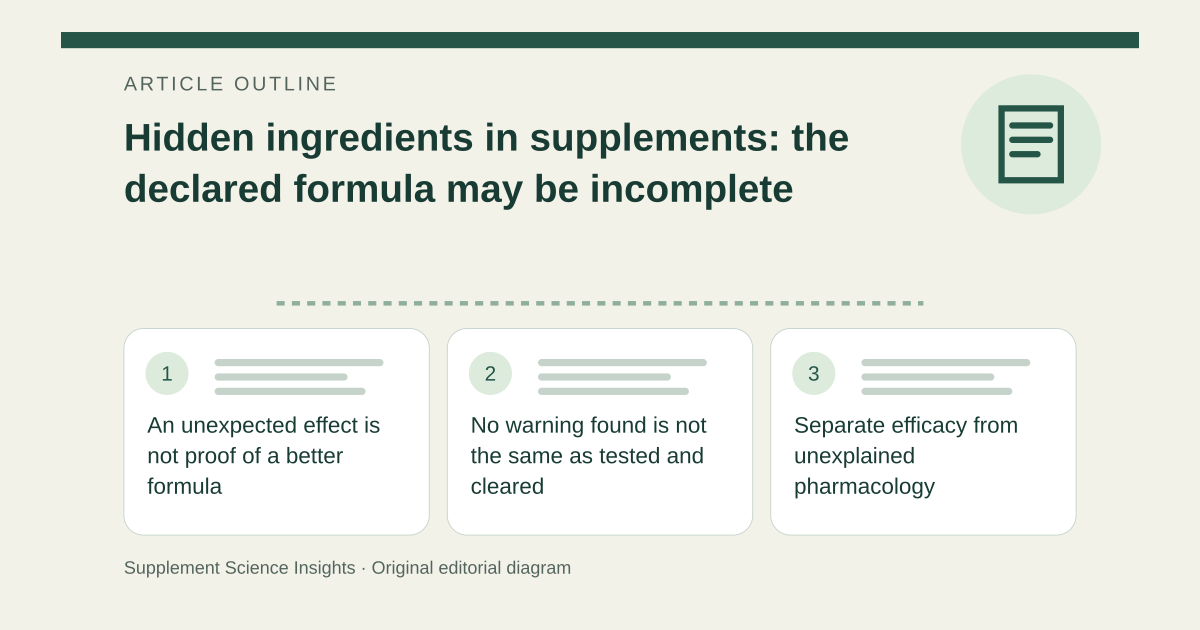
An unexpected effect is not proof of a better formula
FDA has identified products marketed as supplements that contain hidden drug ingredients or steroid-like substances. An undeclared active substance can introduce interactions and adverse effects that a consumer could not predict from the label. [1][2]
This differs from an openly declared ingredient with weak evidence. In one case the research claim may be unsupported; in the other, the stated composition itself may be incomplete. Both questions matter, but they require different evidence. [1][2]
No warning found is not the same as tested and cleared
FDA explicitly notes that it cannot test and identify every product with harmful hidden ingredients. Absence from a warning list is therefore not a laboratory finding of purity. A changed seller name or label also cannot establish that a previously problematic formulation has been corrected. [1][2]
Report suspected adverse effects through the appropriate FDA reporting pathway and seek medical assessment when needed. Retain the product name, label, lot information and purchase details to make the exposure easier to investigate. [1][2]
Separate efficacy from unexplained pharmacology
Imagine an ostensibly herbal product causes an unusually strong drug-like effect. That response does not establish that the advertised herb works. The actual composition remains a safety question.
| Detail | Implication |
|---|---|
| Declared formula | May omit hidden substances |
| No listed warning | Not proof of testing |
| Unexpected effect | Needs exposure assessment |
Sources for this article
- FDA: Caution — Bodybuilding Products Can Be Risky
Source consulted: 2026-09-17. This is a reference resource, not a claim that we conducted the studies or tested a product. - FDA: Hidden ibutamoren in Agebox iKids Growth Day Formula
Source consulted: 2026-09-17. This is a reference resource, not a claim that we conducted the studies or tested a product.