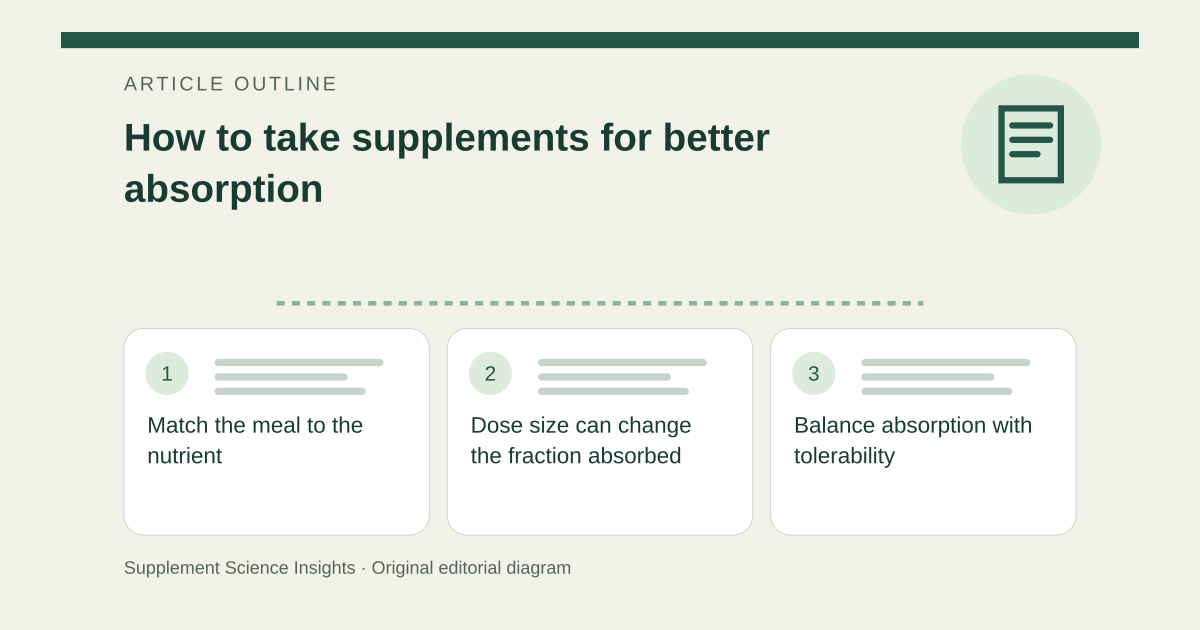
Match the meal to the nutrient
ODS advises taking vitamin D with a meal or snack containing some fat. Calcium citrate is less dependent on stomach acid than carbonate. These are defined examples, not evidence that every capsule needs a fatty meal or that a premium form is always clinically superior. [1][2]
Dose size can change the fraction absorbed
For calcium, absorption is highest at doses of 500 mg or less. This is an absorption observation, not a recommendation that everyone add 500 mg. Determine the supplemental need from food intake and the clinical plan before dividing a larger daily amount. [2]
Balance absorption with tolerability
Ferrous sulfate is best taken on an empty stomach when tolerated. NHS permits taking it with or after food if it upsets the stomach and advises a gap from tea, coffee, eggs and dairy. A plan that causes persistent vomiting or cannot be followed needs review. [3]
Persistent low levels need an explanation
Imagine laboratory values remain low despite apparently correct use. Review adherence, the actual label, medicines and possible underlying causes with the clinician. Do not assume doubling the dose or purchasing an enhanced-absorption blend is the right response. [4][2]
| Decision | Useful check |
|---|---|
| Meal effect | Nutrient-specific |
| Large calcium serving | Lower fraction absorbed |
| Iron intolerance | Discuss a workable regimen |
| Persistent deficiency | Review cause and treatment |
Sources for this article
- Vitamin D - Consumer
Source consulted: 2026-09-21. This is a reference resource, not a claim that we conducted the studies or tested a product. - Calcium - Health Professional Fact Sheet
Source consulted: 2026-09-21. This is a reference resource, not a claim that we conducted the studies or tested a product. - How and when to take ferrous sulfate - NHS
Source consulted: 2026-09-21. This is a reference resource, not a claim that we conducted the studies or tested a product. - Dietary Supplements: What You Need to Know - Consumer
Source consulted: 2026-09-21. This is a reference resource, not a claim that we conducted the studies or tested a product.