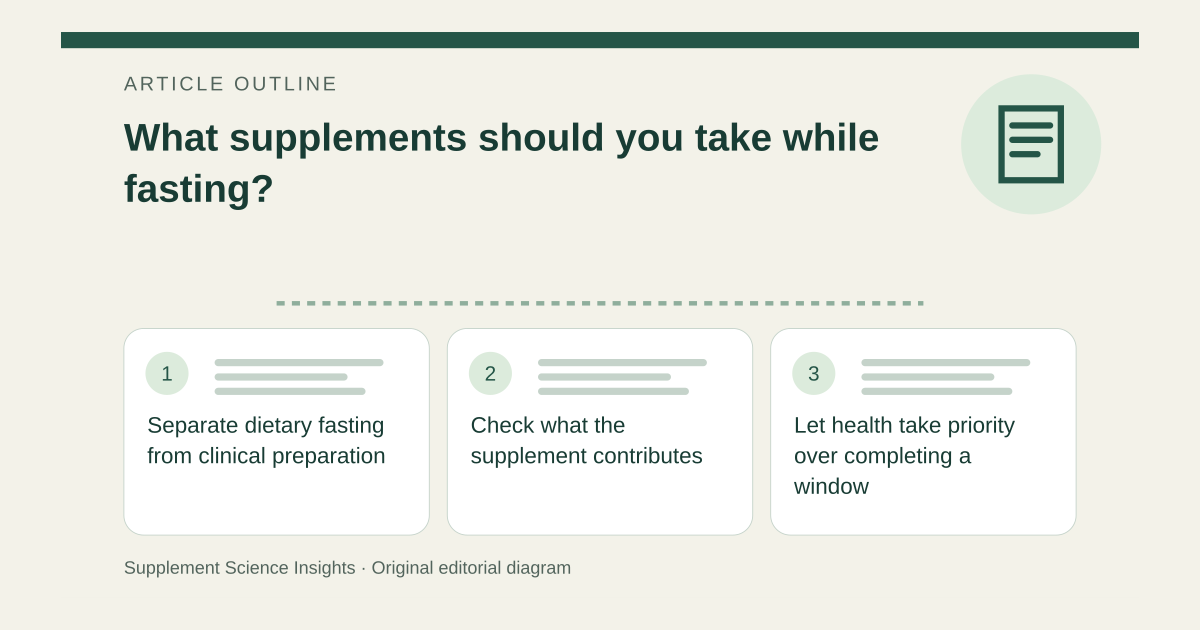
Separate dietary fasting from clinical preparation
Intermittent-fasting guidance commonly allows water and plain zero-calorie tea or coffee. A medical test can require water only, and procedures have their own fluid rules. Take instructions about medicines and supplements from the team responsible for the test or procedure. [1][2]
Check what the supplement contributes
Protein, oils and sweetened gummies supply nutrients or calories. A mineral product may contain sweeteners or other ingredients, and adding potassium or other electrolytes without a need can be inappropriate with some conditions or medicines. The absence of calories does not establish safety or necessity. [3]
Let health take priority over completing a window
Imagine dizziness or marked weakness during a fast. Do not assume a new electrolyte blend will resolve the cause or continue a restrictive plan at all costs. Review the symptoms and plan with a clinician, especially when medicines affect blood glucose. Longer fasting schedules require more than a shopping list. [1][3]
| Question | Interpretation |
|---|---|
| Short routine fast | No automatic supplement requirement |
| Caloric supplement | May end the dietary fast |
| Clinical procedure | Follow its own instructions |
| New symptoms | Reassess the plan |
Sources for this article
- Johns Hopkins Medicine: Intermittent fasting
Source consulted: 2026-09-21. This is a reference resource, not a claim that we conducted the studies or tested a product. - Fasting for a Blood Test: MedlinePlus Medical Test
Source consulted: 2026-09-21. This is a reference resource, not a claim that we conducted the studies or tested a product. - Dietary Supplements: What You Need to Know - Consumer
Source consulted: 2026-09-21. This is a reference resource, not a claim that we conducted the studies or tested a product.