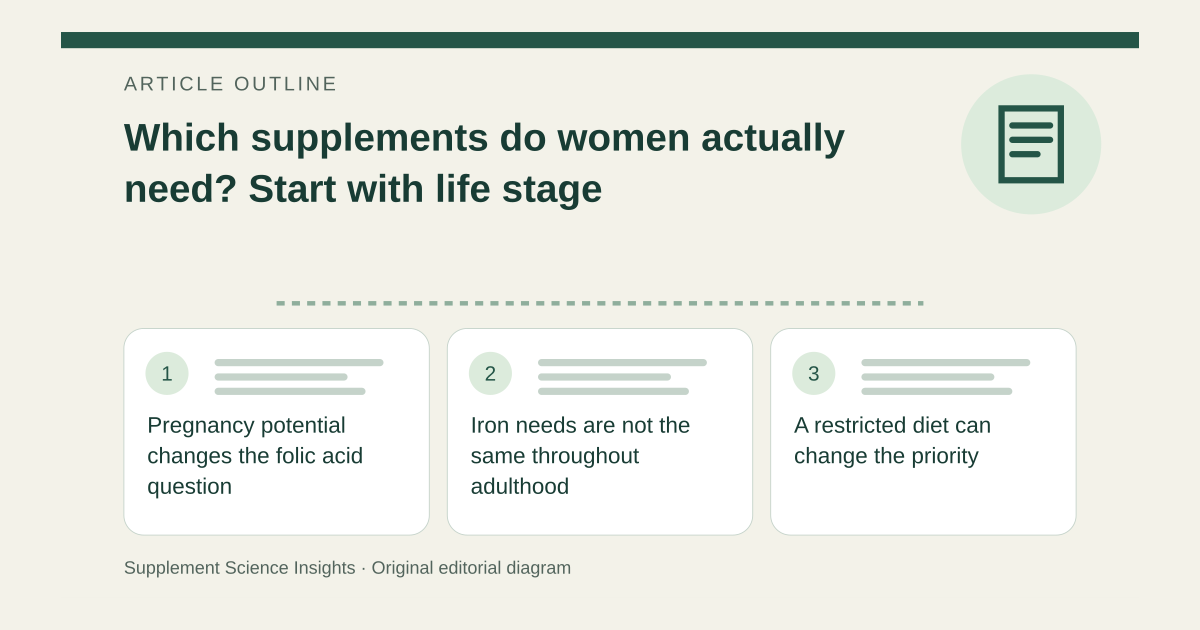
Pregnancy potential changes the folic acid question
CDC guidance summarized by NIH recommends 400 micrograms of folic acid daily for people who could become pregnant. This is a specific recommendation to reduce neural tube defect risk, not a general reason to take high doses of every B vitamin. Individual pregnancy or prior-pregnancy circumstances may require different clinical advice. [1]
Iron needs are not the same throughout adulthood
The U.S. iron RDA is 18 mg daily for women ages 19–50 and 8 mg from age 51, with separate pregnancy and lactation values. These are total intake reference amounts, not automatic supplement doses. Menstrual losses and a clinical assessment matter; fatigue alone does not diagnose iron deficiency. [2]
A restricted diet can change the priority
B12 occurs naturally in animal foods; fortified foods can supply it in a plant-based diet. A reliable intake source matters more than whether a product is marketed to women. Nutrient replacement should be planned around the dietary gap rather than a beauty or energy promise. [3]
Compare the contents rather than the category name
Multivitamins do not have a standardized composition. Compare amounts with food and other products already used, and check for duplication. A formula may help fill gaps while still providing little calcium; it is not a substitute for a varied diet. [4]
Make the reason for each addition explicit
Imagine someone who could become pregnant and eats no animal foods. Folic acid prevention and a dependable B12 source are separate decisions. An iron tablet still needs its own rationale; adding it solely because the bottle says women’s health skips that assessment. [1][3][2]
| Situation | Decision to discuss |
|---|---|
| Pregnancy possible | Folic acid prevention guidance |
| Vegan diet | Reliable B12 intake |
| Possible iron deficiency | Assess before treating |
Sources for this article
- Folate - Health Professional Fact Sheet
Source consulted: 2026-09-20. This is a reference resource, not a claim that we conducted the studies or tested a product. - Iron - Health Professional Fact Sheet
Source consulted: 2026-09-20. This is a reference resource, not a claim that we conducted the studies or tested a product. - Vitamin B12 - Health Professional Fact Sheet
Source consulted: 2026-09-20. This is a reference resource, not a claim that we conducted the studies or tested a product. - Multivitamin/mineral Supplements
Source consulted: 2026-09-20. This is a reference resource, not a claim that we conducted the studies or tested a product.