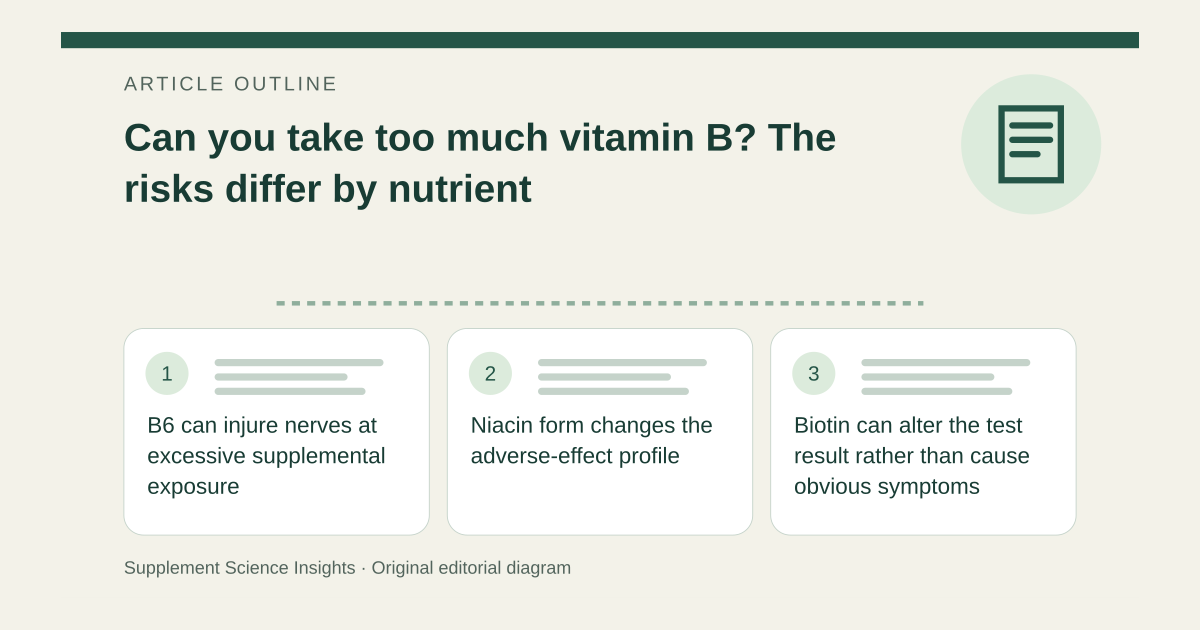
B6 can injure nerves at excessive supplemental exposure
NIH ODS describes sensory neuropathy from excessive pyridoxine intake. New tingling, numbness or balance problems during supplementation deserve clinical assessment, not an assumption that more B vitamins will treat them. Count B6 in combination products as well as a standalone bottle. [1]
Niacin form changes the adverse-effect profile
Nicotinic acid can cause flushing; nicotinamide does not have the same flushing effect. High-dose niacin regimens can cause serious adverse effects, including liver toxicity. A flush-free label therefore does not establish that any dose or preparation is safe. [2]
Biotin can alter the test result rather than cause obvious symptoms
High biotin intake can interfere with certain laboratory assays, including some hormone tests. Tell the clinician and laboratory the dose and last use. Follow their test-specific instructions rather than assuming a generic waiting period works for every assay. [3]
Several ordinary-looking products can overlap
A multivitamin, energy blend and beauty supplement may repeat B vitamins in different amounts. Add the daily servings nutrient by nutrient. A percentage of daily value measures a reference comparison; it is not a universal toxicity threshold or a reason to aim higher. [4]
A product-level question needs ingredient-level arithmetic
Imagine one product contains 10 mg of B6 and another contains 20 mg per daily serving. Together they supply 30 mg before any other sources. The total is the relevant exposure to review; the fact that there are only two tablets does not establish safety. [1]
| Finding | What it means |
|---|---|
| Water-soluble label | Does not remove dose-related risks |
| New nerve symptoms | Seek assessment |
| Biotin before blood testing | Disclose dose and timing |
Sources for this article
- Vitamin B6 - Health Professional Fact Sheet
Source consulted: 2026-09-20. This is a reference resource, not a claim that we conducted the studies or tested a product. - Niacin - Health Professional Fact Sheet
Source consulted: 2026-09-20. This is a reference resource, not a claim that we conducted the studies or tested a product. - Biotin - Health Professional Fact Sheet
Source consulted: 2026-09-20. This is a reference resource, not a claim that we conducted the studies or tested a product. - Multivitamin/mineral Supplements
Source consulted: 2026-09-20. This is a reference resource, not a claim that we conducted the studies or tested a product.