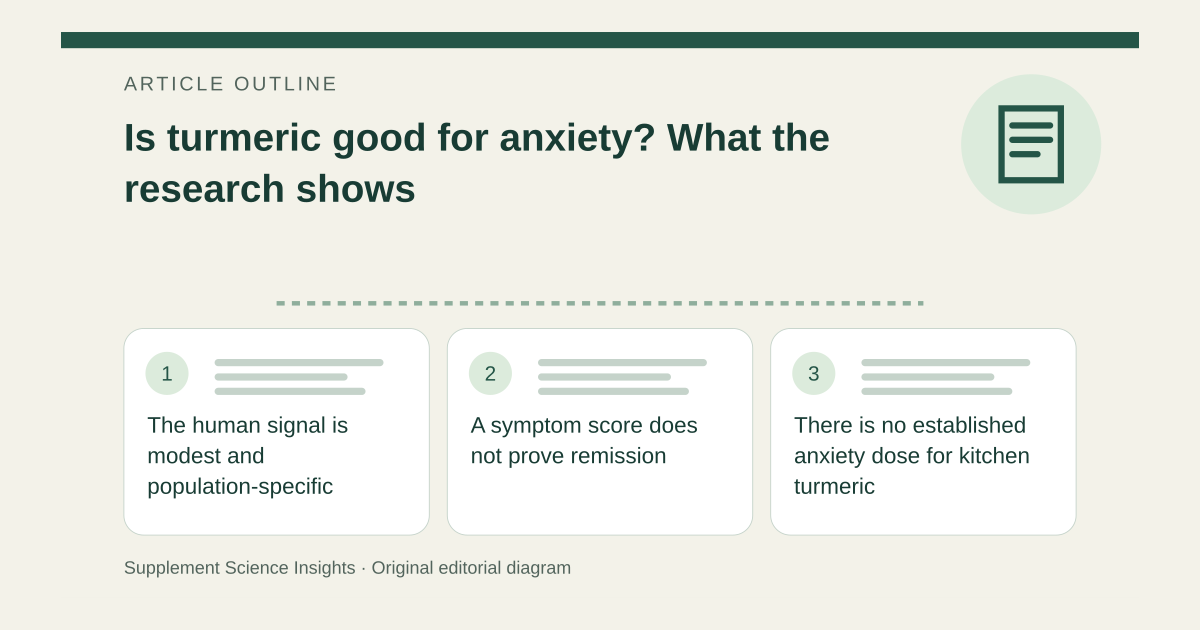
The human signal is modest and population-specific
A 2025 systematic review found a small pooled improvement in anxiety symptoms among adults with chronic diseases. Its findings concern mood symptoms accompanying those illnesses, not every person with an anxiety disorder. The review also included animal mechanisms, which should be kept separate from human treatment evidence. [1]
A symptom score does not prove remission
About half the included studies had low risk of bias, while others had high or unclear risk. Different conditions, formulations and assessment methods limit how confidently a pooled score predicts useful improvement for one person. A statistically detectable difference is not automatically restored sleep, work or daily functioning. [1]
There is no established anxiety dose for kitchen turmeric
The reviewed products were defined preparations with differing absorption. They do not establish a teaspoon amount, tea recipe or universal supplement regimen for anxiety. NCCIH also warns that some enhanced products have been associated with liver injury. [1][2]
Keep effective care in place
Discuss persistent or distressing symptoms with a health professional. Regular sleep, activity and supportive relationships can complement treatment. If medication is prescribed, do not stop or alter it to try a supplement without the prescriber; provide the complete supplement label for review. [3][4]
Judge an adjunct by daily life as well as scores
Imagine a questionnaire score improves slightly but worry still prevents leaving home. That remains a reason to review treatment, rather than assuming turmeric has controlled the disorder. A plan should address the symptoms and activities that matter to the person. [3][1]
| Evidence | Boundary |
|---|---|
| Chronic-disease studies | Not all anxiety disorders |
| Small score change | Not necessarily remission |
| Animal mechanism | Not a human treatment result |
| Specific supplement | Not a turmeric tea dose |
Sources for this article
- Frontiers | Potential therapeutic benefits of curcumin in depression or anxiety induced by chronic diseases: a systematic review of mechanistic and clinical evidence
Source consulted: 2026-09-21. This is a reference resource, not a claim that we conducted the studies or tested a product. - Turmeric: Usefulness and Safety | NCCIH
Source consulted: 2026-09-21. This is a reference resource, not a claim that we conducted the studies or tested a product. - Caring for Your Mental Health - National Institute of Mental Health (NIMH)
Source consulted: 2026-09-21. This is a reference resource, not a claim that we conducted the studies or tested a product. - Mental Health Medications - National Institute of Mental Health (NIMH)
Source consulted: 2026-09-21. This is a reference resource, not a claim that we conducted the studies or tested a product.