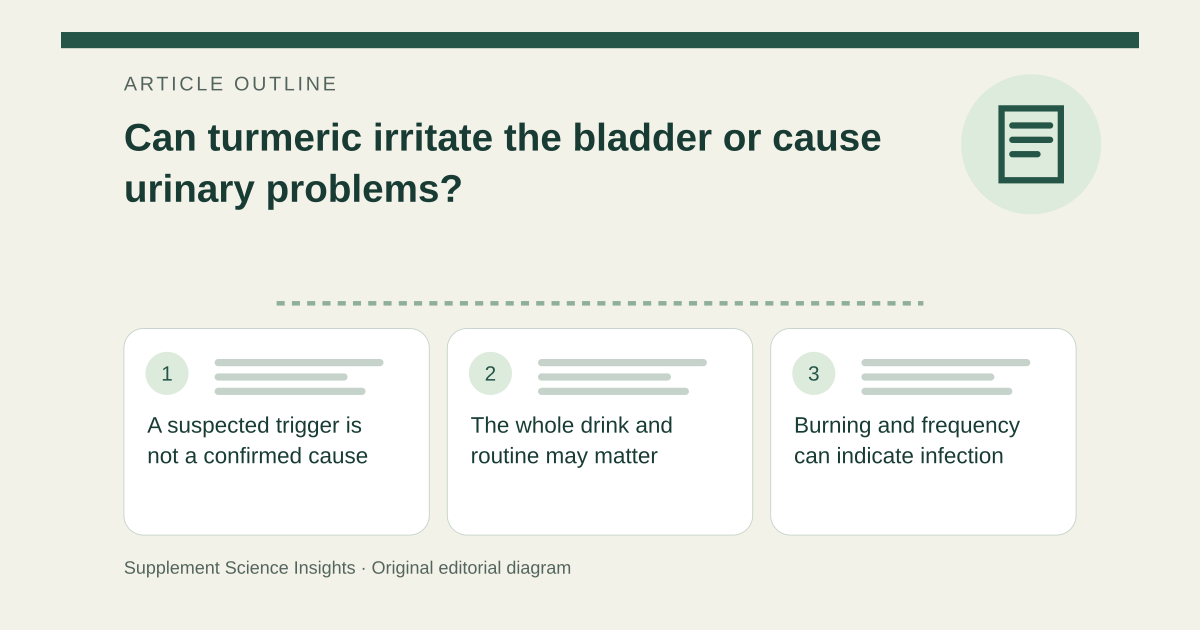
A suspected trigger is not a confirmed cause
NCCIH safety information does not establish a common turmeric-related bladder syndrome. That leaves uncertainty about individual reactions rather than proving universal tolerance. Record the product, dose, timing and other ingredients when symptoms appear after a new supplement. [1]
The whole drink and routine may matter
Caffeine and the amount of fluid consumed can affect urgency or leakage. Some foods, drinks and medicines also contribute to bladder-control symptoms. A large caffeinated turmeric drink is therefore not the same exposure as a small amount of spice in a meal. [2][3]
Burning and frequency can indicate infection
NHS guidance includes painful urination, urgency, cloudy urine, blood, lower abdominal pain and fever among possible UTI symptoms. These need appropriate assessment and, when indicated, treatment. Do not assume a supplement is flushing toxins or that an anti-inflammatory ingredient will treat an infection. [4]
Know when to seek prompt care
Inability to pass urine or empty the bladder needs immediate medical attention. Blood in urine, fever or shivering, pain under the ribs, pregnancy or a weakened immune system are reasons for prompt assessment of urinary symptoms. Confusion or marked drowsiness with suspected infection requires emergency care. [3][4]
Use a diary without delaying diagnosis
Imagine urgency starts after adding several cups of a caffeinated turmeric drink. A record of fluid, caffeine and symptoms can help identify contributors, but persistent burning still deserves evaluation. Do not severely restrict fluids or repeatedly challenge yourself with a suspected product to prove the connection. [2][4][1]
| Change | Relevant action |
|---|---|
| Urgency after a new drink | Review caffeine, volume and ingredients |
| Persistent burning | Assess possible infection or other cause |
| Blood or fever | Prompt medical advice |
| Unable to pass urine | Immediate assessment |
Sources for this article
- Turmeric: Usefulness and Safety | NCCIH
Source consulted: 2026-09-21. This is a reference resource, not a claim that we conducted the studies or tested a product. - Urinary incontinence - Non-surgical treatment - NHS
Source consulted: 2026-09-21. This is a reference resource, not a claim that we conducted the studies or tested a product. - Symptoms & Causes of Bladder Control Problems (Urinary Incontinence) - NIDDK
Source consulted: 2026-09-21. This is a reference resource, not a claim that we conducted the studies or tested a product. - Urinary tract infections (UTIs) - NHS
Source consulted: 2026-09-21. This is a reference resource, not a claim that we conducted the studies or tested a product.