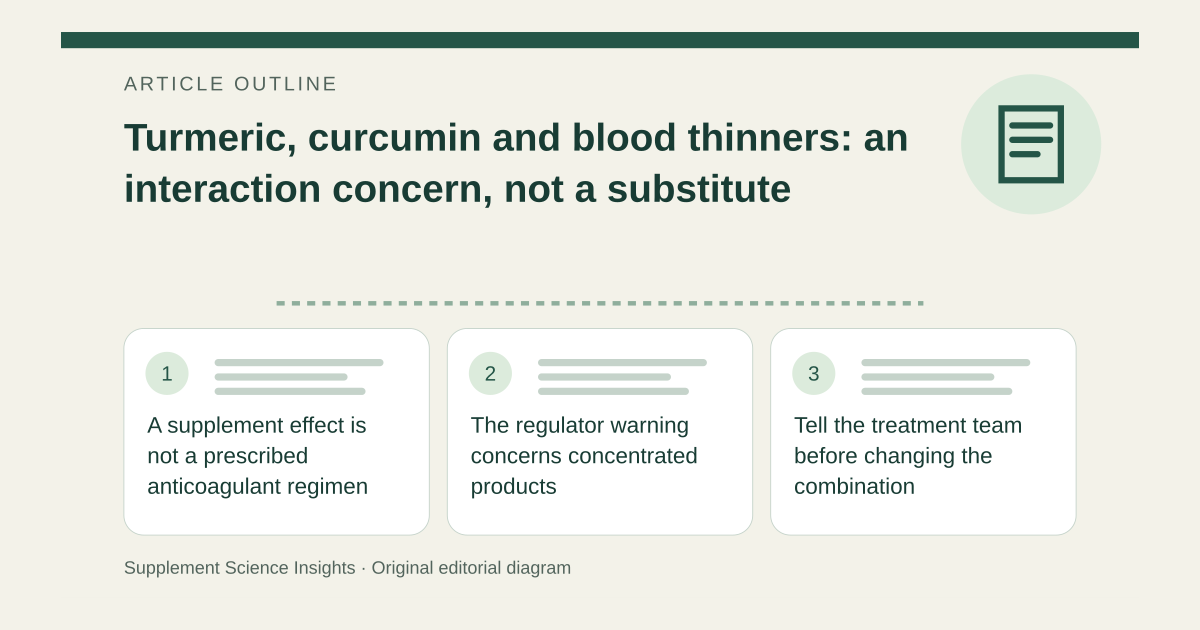
A supplement effect is not a prescribed anticoagulant regimen
Curcumin-related antiplatelet effects have been described, but a supplement label does not establish a predictable clot-prevention dose. Do not substitute turmeric for prescribed anticoagulant treatment or use it to counteract a medicine. An interaction concern is a reason to review the combination, not evidence of equivalent benefit. [1]
The regulator warning concerns concentrated products
Medsafe warns about turmeric or curcumin natural-health products with medicines that affect bleeding, including anticoagulants, antiplatelets and NSAIDs. Its communication explicitly excludes turmeric used in food. That distinction does not establish a safe concentrated-drink or capsule dose for someone taking warfarin. [1]
Tell the treatment team before changing the combination
Show the pharmacist or anticoagulation clinic the complete formula, including absorption enhancers. Do not stop prescribed medicine on your own. The clinician can decide whether a supplement should be avoided and whether monitoring needs to change. [1][2]
Turmeric does not belong in a bleeding emergency
Seek immediate medical help for severe or recurrent bleeding, blood in urine, black stools, vomiting blood, or bleeding that will not stop. A significant head injury while taking an anticoagulant also needs immediate assessment. Do not delay that care while trying a food powder or home remedy. [3]
Keep food use and medicinal exposure separate
Imagine a person taking warfarin adds a high-strength curcumin capsule because turmeric is familiar in dinner. The food experience does not clear the supplement combination. Contact the treatment team with the exact product before continuing the new product. [1]
| Exposure | Relevant distinction |
|---|---|
| Seasoning in food | Outside the cited regulator supplement warning |
| Concentrated supplement | Interaction review needed |
| Prescribed anticoagulant | Do not replace with turmeric |
Sources for this article
- Beware turmeric/curcumin containing products can interact with warfarin
Source consulted: 2026-09-21. This is a reference resource, not a claim that we conducted the studies or tested a product. - Botanical Dietary Supplements Background Information - Consumer
Source consulted: 2026-09-21. This is a reference resource, not a claim that we conducted the studies or tested a product. - Anticoagulant medicines - Side effects - NHS
Source consulted: 2026-09-21. This is a reference resource, not a claim that we conducted the studies or tested a product.